
In Tom Nelson’s family, the story goes that he didn’t set foot on a boat until he was five weeks old. His 92-year-old mother still laughs about it—how they “kept him off the water” as long as they could.
It didn’t take long for the water to take hold. Tom has made a life on the water, one he now shares as the voice of Seattle Saturday morning outdoor radio on the “Outdoor Line,” a weekly show broadcasted through the ESPN® radio affiliate in Seattle.
It all started with a boat his father owned when Tom was young, a 1948 Steel Craft® cabin cruiser, purchased at one of the very first Seattle Boat Shows. It was a 26-foot steel boat built in West Haven, Conn.—heavy, unforgiving, and always in motion. To Tom, it was simply life. Growing up along Puget Sound, he assumed everyone fished. You either worked the saltwater or headed for the rivers in pursuit of king salmon.
Some days still stand out. He remembers landing six salmon over 50 pounds during his education as an angler with his father; fish that tested both strength and patience. In the decades since his father passed, he has only matched that kind of success a handful of times. The memory remains a benchmark, not just of fishing, but of time shared.
Life on the water came with responsibility. Each fall meant hauling the boat out, scraping and repainting the hull, preparing for another season. It was part of the rhythm. The work was the price of being out there on the water.
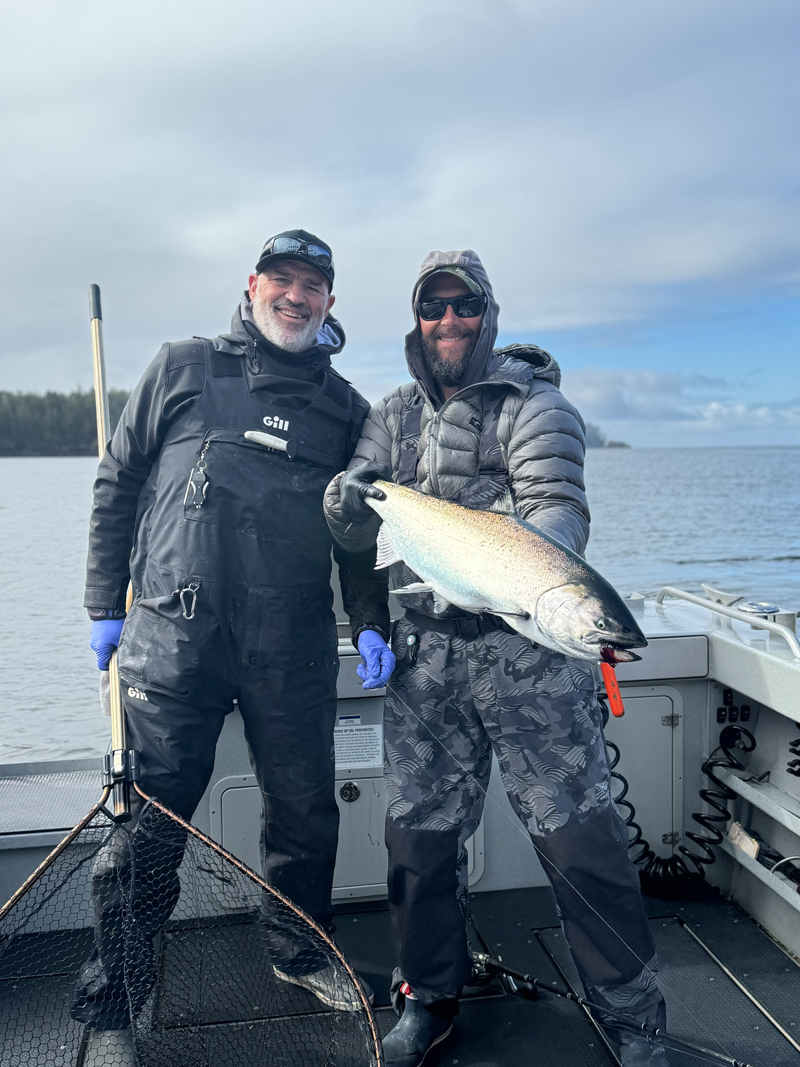
By the 1980s, both the fishery and the boats were changing. Jet pumps opened up shallow water, allowing anglers to run farther upriver in early “wooden sleds,” and later aluminum designs. Tom followed that evolution closely, eventually building a career around it. For more than 15 years, he has worked with Duckworth® Boats, running aluminum vessels designed for the demanding conditions of the Pacific Northwest. His current boat, a 34-foot Duckworth® Atlas walkaround, reflects decades of refinement, and a platform built for range, stability, and the ability to move freely around the entire boat.
Through it all, one constant has remained: Yamaha.
His first four-stroke outboard, a Yamaha 9.9, was mounted to the transom of that original Steel Craft as a trolling motor. Since then, every boat he has run carried Yamaha power. The F300, in particular, earned his respect. That reliability was proven in Southeast Alaska, where conditions are as remote as they are unforgiving. Over six years, Tom logged more than 3,500 hours on a single platform, running in open water miles from help without a second thought about the engines behind him. “You can’t spit in a harbor up there without hitting a Yamaha,” he says. “That’s where the real working guides are.”
Tom’s path to the water was not linear. He earned a degree in fisheries biology from the University of Washington and began his career working with the Alaska Department of Fish and Game, as well as in research roles. For a time, it seemed his future would be in science. Instead, he took a different turn.
In the late 1980s, Tom joined the Seattle Fire Department, where he would spend decades serving the city as a fireboat pilot. The vessels were a far cry from the boats of his youth. Instead, they were up to 130 feet long, powered by 6,000 total horsepower, capable of pumping 5,000 gallons of water per minute. The work demanded precision, teamwork, and the ability to respond in unpredictable conditions.
He also played a role in designing Seattle’s first dedicated fire rescue boat, Rescue 5, which, like his personal vessels, was powered by Yamaha. The mission extended beyond firefighting. Much of the work involved rescue work such as responding to emergencies on ferries, assisting vessels in distress, and navigating some of the busiest waterways in the region.
“Marine Rescue work happens more often than maritime or vessel fires,” he says. “And when you can make a difference, it stays with you.”
Even during his years in the fire service, Tom never stepped away from fishing. He built a guide business, coached youth sports, and spent countless hours on the rivers pursuing salmon and steelhead.
Over time, his experience found a broader audience through writing. Articles led to opportunities in magazines and online platforms, and eventually, to radio.
What began as a simple opportunity quickly grew. A connection through a former college roommate, NFL® player and two-time Superbowl® champ Kevin Gogan, helped land an early show featuring guests like Troy Aikman. The experience opened the door to a long-running career in outdoor radio.
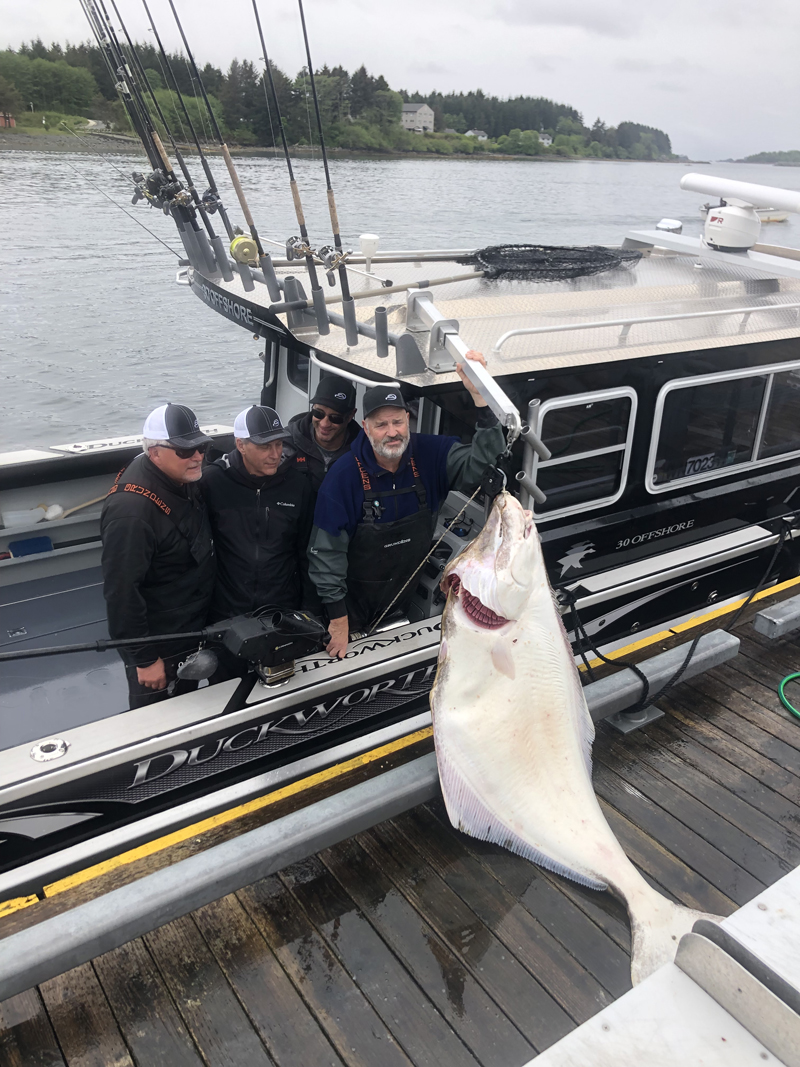
Today, nearly 24 years later, Tom’s show, the Outdoor Line, is one of the Pacific Northwest’s only live outdoor radio programs. The platform has expanded his reach and allowed him to stay connected to the industry and community that shaped him. It has also taken him farther than ever before.
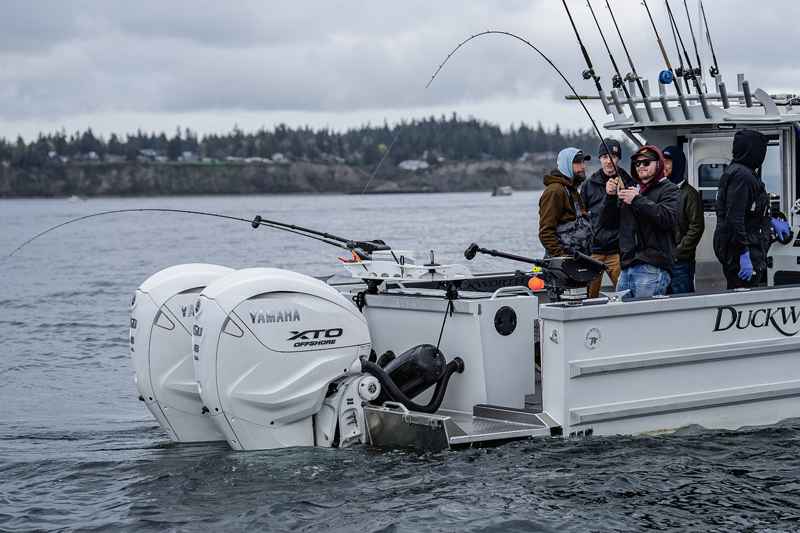
Now running Yamaha V8 450 XTO® outboard, Tom has pushed into longer, more ambitious trips. On one recent run, he traveled more than 400 miles from the Port of Everett to Rivers Inlet, confident in both the performance and reliability beneath him. Advances in technology, including Yamaha’s Helm Master® EX, continue to change how he fishes. He’s even adding the Helm Master EX Wireless Control System to his boat, which will allow him to manage the boat, from anywhere on the boat, while staying fully engaged in the moment. For Tom, those innovations are not about convenience. They are about connection to the water, to the experience, and to the people who share it.
Looking back, it all traces to where he started. The waters of Puget Sound remain as defining as ever—an inland sea rich with salmon, crab, shrimp, and whales. It is a place that shaped not only his career, but his identity.
“I’ve been fortunate,” he says. “To grow up here, to work on the water, and to stay connected to it all these years. I can’t imagine doing anything else.” Back to Blue Tales
It didn’t take long for the water to take hold. Tom has made a life on the water, one he now shares as the voice of Seattle Saturday morning outdoor radio on the “Outdoor Line,” a weekly show broadcasted through the ESPN® radio affiliate in Seattle.
It all started with a boat his father owned when Tom was young, a 1948 Steel Craft® cabin cruiser, purchased at one of the very first Seattle Boat Shows. It was a 26-foot steel boat built in West Haven, Conn.—heavy, unforgiving, and always in motion. To Tom, it was simply life. Growing up along Puget Sound, he assumed everyone fished. You either worked the saltwater or headed for the rivers in pursuit of king salmon.
Some days still stand out. He remembers landing six salmon over 50 pounds during his education as an angler with his father; fish that tested both strength and patience. In the decades since his father passed, he has only matched that kind of success a handful of times. The memory remains a benchmark, not just of fishing, but of time shared.
Life on the water came with responsibility. Each fall meant hauling the boat out, scraping and repainting the hull, preparing for another season. It was part of the rhythm. The work was the price of being out there on the water.
By the 1980s, both the fishery and the boats were changing. Jet pumps opened up shallow water, allowing anglers to run farther upriver in early “wooden sleds,” and later aluminum designs. Tom followed that evolution closely, eventually building a career around it. For more than 15 years, he has worked with Duckworth® Boats, running aluminum vessels designed for the demanding conditions of the Pacific Northwest. His current boat, a 34-foot Duckworth® Atlas walkaround, reflects decades of refinement, and a platform built for range, stability, and the ability to move freely around the entire boat.
Through it all, one constant has remained: Yamaha.
His first four-stroke outboard, a Yamaha 9.9, was mounted to the transom of that original Steel Craft as a trolling motor. Since then, every boat he has run carried Yamaha power. The F300, in particular, earned his respect. That reliability was proven in Southeast Alaska, where conditions are as remote as they are unforgiving. Over six years, Tom logged more than 3,500 hours on a single platform, running in open water miles from help without a second thought about the engines behind him. “You can’t spit in a harbor up there without hitting a Yamaha,” he says. “That’s where the real working guides are.”
Tom’s path to the water was not linear. He earned a degree in fisheries biology from the University of Washington and began his career working with the Alaska Department of Fish and Game, as well as in research roles. For a time, it seemed his future would be in science. Instead, he took a different turn.
In the late 1980s, Tom joined the Seattle Fire Department, where he would spend decades serving the city as a fireboat pilot. The vessels were a far cry from the boats of his youth. Instead, they were up to 130 feet long, powered by 6,000 total horsepower, capable of pumping 5,000 gallons of water per minute. The work demanded precision, teamwork, and the ability to respond in unpredictable conditions.
He also played a role in designing Seattle’s first dedicated fire rescue boat, Rescue 5, which, like his personal vessels, was powered by Yamaha. The mission extended beyond firefighting. Much of the work involved rescue work such as responding to emergencies on ferries, assisting vessels in distress, and navigating some of the busiest waterways in the region.
“Marine Rescue work happens more often than maritime or vessel fires,” he says. “And when you can make a difference, it stays with you.”
Even during his years in the fire service, Tom never stepped away from fishing. He built a guide business, coached youth sports, and spent countless hours on the rivers pursuing salmon and steelhead.
Over time, his experience found a broader audience through writing. Articles led to opportunities in magazines and online platforms, and eventually, to radio.
What began as a simple opportunity quickly grew. A connection through a former college roommate, NFL® player and two-time Superbowl® champ Kevin Gogan, helped land an early show featuring guests like Troy Aikman. The experience opened the door to a long-running career in outdoor radio.
Today, nearly 24 years later, Tom’s show, the Outdoor Line, is one of the Pacific Northwest’s only live outdoor radio programs. The platform has expanded his reach and allowed him to stay connected to the industry and community that shaped him. It has also taken him farther than ever before.
Now running Yamaha V8 450 XTO® outboard, Tom has pushed into longer, more ambitious trips. On one recent run, he traveled more than 400 miles from the Port of Everett to Rivers Inlet, confident in both the performance and reliability beneath him. Advances in technology, including Yamaha’s Helm Master® EX, continue to change how he fishes. He’s even adding the Helm Master EX Wireless Control System to his boat, which will allow him to manage the boat, from anywhere on the boat, while staying fully engaged in the moment. For Tom, those innovations are not about convenience. They are about connection to the water, to the experience, and to the people who share it.
Looking back, it all traces to where he started. The waters of Puget Sound remain as defining as ever—an inland sea rich with salmon, crab, shrimp, and whales. It is a place that shaped not only his career, but his identity.
“I’ve been fortunate,” he says. “To grow up here, to work on the water, and to stay connected to it all these years. I can’t imagine doing anything else.” Back to Blue Tales