

Your boat is a playground for good times. But your boat lives a life of full exposure in the marine environment. If you don’t take care of the little things, they become big things. Keeping up on routine tasks that will protect the fiberglass, metal, glass and cushions means more time enjoying the boat and less headaches down the road.
The marine environment is no joke. Sun bleaches and oxidizes gelcoat. Salt attacks metal hardware, corrodes electrical connections, and if you don’t flush your Yamaha outboard after use in saltwater, it will even attack in the inner workings of your powerplant. Dirt and biological growth clings to hulls and fouls running gear. It sounds like a never-ending battle but if you keep a consistent, straightforward maintenance routine, you can keep your boat looking sharp and running strong for years to come. Here are tips to help protect your boat:
1. Wash, Dry, Repeat
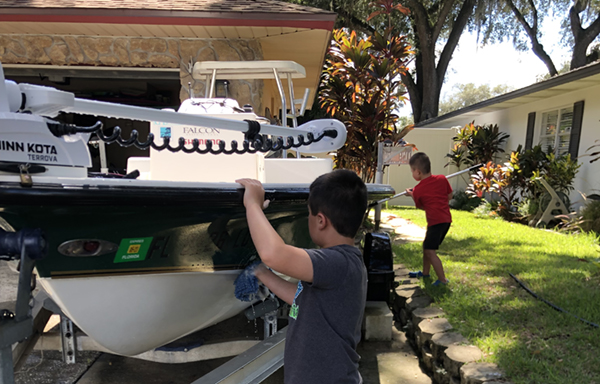
A clean boat is a happy boat. A thorough washdown after every use with a marine-formulated soap is a must. You must also wash the boat after it sits for long periods to clean away debris, leaves and insects that find their way in. Marine soaps are best, but you can use car wash products if need be, but don’t use household detergents that can strip away protective coatings. Start by giving the hull sides a wash with a long-handled brush to remove salt and any scum lines. For the deck, work from the top down. The topside of your T-top takes a beating, so make sure you wash that as well. Soap up and wash out fish boxes and in-deck storage compartments. Leave them open to dry. Be careful around electronics. Don’t directly hose your screens. First, turn them off and let them cool down, then use a microfiber cloth with a bit of glass cleaner on it. After a thorough wash, bust out the chamois and dry every piece of the boat completely. This step is critical to avoid water spots. (see No. 5 below) .
2. Protect Your Hull with Wax or a Ceramic Coating
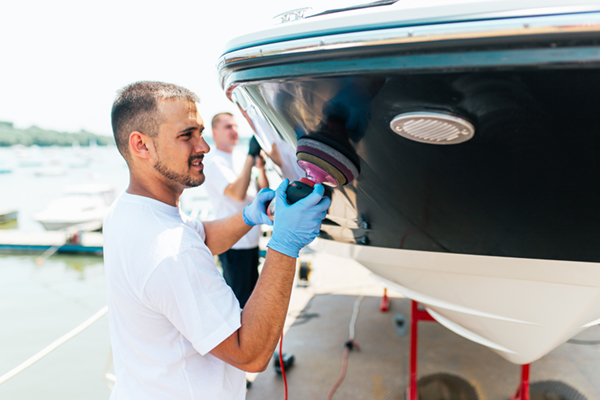
The sun’s UV radiation is the gelcoat’s worst enemy. Left unprotected, exposure will turn white hulls chalky and cause colors to fade. Your boat needs a protective coating to combat the sun’s UV rays, just like we need to put on sunblock before a long day on the water. A quality marine wax or ceramic coating creates a sacrificial barrier between the gelcoat and the sun. For boats stored outdoors, waxing twice a year — spring and fall — is a minimum. Ceramic coatings last much longer, up to three or more years. You can put a ceramic coating on the boat yourself, but you must remove all wax on the hull before you apply it because the ceramic creates a hard surface and locks in whatever is underneath it. Salt and grime struggle to bond to the coating, water sheets off effortlessly, and your gelcoat stays glossy.
3. Cover Everything When Not in Use
A tight-fitting canvas cover is one of the highest-return investments a boat owner can make. Covered storage is your best bet, but a quality cover works well for boats that live on a trailer, a lift or at the dock. After cleaning and drying your boat, remove any cushions you can. If left uncovered, upholstery will fade, crack, and grow mildew. Electronics also degrade under constant sun exposure. Dash surfaces and T-top components oxidize. Marine-grade covers dramatically slow all of these processes. If you can’t cover the entire boat, you should use smaller covers for helm seats, the console and dash, outboards and bow cushions. For trailered boats, a cover also keeps bird droppings, and tree sap at bay. If these contaminants are left to bake in the sun, they can permanently stain gelcoat and upholstery.
4. Polish Stainless and Aluminum
Stainless steel is corrosion-resistant, not corrosion-proof and aluminum, chrome, and bronze fittings are even more vulnerable and can become pitted. Salt and moisture accelerate galvanic corrosion wherever dissimilar metals meet, and dirty electrical connections are among the most common causes of mysterious on-water failures. After cleaning, dry hardware thoroughly and apply a corrosion inhibitor spray like Yamashield Rust & Corrosion Protectant. You can also use it on clevis pins, couplers, bolts, trim tabs, battery terminals, and any exposed connector. To maintain a high-gloss finish on your boat’s aluminum or stainless, use a polish that removes oxidation, stains, and rust. It’s amazing what you can clean up with some elbow grease and the right products.
5. Remove Water Spots Before They Become Permanent
Water spots drive me insane. Salt is easy to remove from glass windshields but the microscopic minerals in fresh water leave behind deposits that etch into the surface over time. On uncoated glass, UV exposure bakes them in deeper with every passing week until they can no longer be wiped away. Removing water spots when they’re fresh is easy, just spray on a dedicated marine glass cleaner or a diluted white vinegar solution and wipe clean with a soft microfiber cloth. This will dissolve mineral buildup without scratching. For stubborn deposits, a purpose-made water spot remover with a light acidic base works without abrasives. Once the glass is clean, apply a hydrophobic glass treatment — similar to what’s used on car windshields — to cause water to bead and roll off rather than sit and evaporate. Reapply every few months and you’ll spend far less time scrubbing and far more time enjoying the view.
These tips will help you keep your boat clean and protected. There are other tasks that you should keep up on like replacing zincs and anti-fouling paint. After cleaning the boat, I tend to just stare at it for a few minutes. My family makes fun of me for this, but it gives me joy, a reward for my efforts. Yes, it takes some sweat equity, but having a clean, protected boat is worth it.
Back to Blue Life
The marine environment is no joke. Sun bleaches and oxidizes gelcoat. Salt attacks metal hardware, corrodes electrical connections, and if you don’t flush your Yamaha outboard after use in saltwater, it will even attack in the inner workings of your powerplant. Dirt and biological growth clings to hulls and fouls running gear. It sounds like a never-ending battle but if you keep a consistent, straightforward maintenance routine, you can keep your boat looking sharp and running strong for years to come. Here are tips to help protect your boat:
1. Wash, Dry, Repeat
A clean boat is a happy boat. A thorough washdown after every use with a marine-formulated soap is a must. You must also wash the boat after it sits for long periods to clean away debris, leaves and insects that find their way in. Marine soaps are best, but you can use car wash products if need be, but don’t use household detergents that can strip away protective coatings. Start by giving the hull sides a wash with a long-handled brush to remove salt and any scum lines. For the deck, work from the top down. The topside of your T-top takes a beating, so make sure you wash that as well. Soap up and wash out fish boxes and in-deck storage compartments. Leave them open to dry. Be careful around electronics. Don’t directly hose your screens. First, turn them off and let them cool down, then use a microfiber cloth with a bit of glass cleaner on it. After a thorough wash, bust out the chamois and dry every piece of the boat completely. This step is critical to avoid water spots. (see No. 5 below) .
2. Protect Your Hull with Wax or a Ceramic Coating
The sun’s UV radiation is the gelcoat’s worst enemy. Left unprotected, exposure will turn white hulls chalky and cause colors to fade. Your boat needs a protective coating to combat the sun’s UV rays, just like we need to put on sunblock before a long day on the water. A quality marine wax or ceramic coating creates a sacrificial barrier between the gelcoat and the sun. For boats stored outdoors, waxing twice a year — spring and fall — is a minimum. Ceramic coatings last much longer, up to three or more years. You can put a ceramic coating on the boat yourself, but you must remove all wax on the hull before you apply it because the ceramic creates a hard surface and locks in whatever is underneath it. Salt and grime struggle to bond to the coating, water sheets off effortlessly, and your gelcoat stays glossy.
3. Cover Everything When Not in Use
A tight-fitting canvas cover is one of the highest-return investments a boat owner can make. Covered storage is your best bet, but a quality cover works well for boats that live on a trailer, a lift or at the dock. After cleaning and drying your boat, remove any cushions you can. If left uncovered, upholstery will fade, crack, and grow mildew. Electronics also degrade under constant sun exposure. Dash surfaces and T-top components oxidize. Marine-grade covers dramatically slow all of these processes. If you can’t cover the entire boat, you should use smaller covers for helm seats, the console and dash, outboards and bow cushions. For trailered boats, a cover also keeps bird droppings, and tree sap at bay. If these contaminants are left to bake in the sun, they can permanently stain gelcoat and upholstery.
4. Polish Stainless and Aluminum
Stainless steel is corrosion-resistant, not corrosion-proof and aluminum, chrome, and bronze fittings are even more vulnerable and can become pitted. Salt and moisture accelerate galvanic corrosion wherever dissimilar metals meet, and dirty electrical connections are among the most common causes of mysterious on-water failures. After cleaning, dry hardware thoroughly and apply a corrosion inhibitor spray like Yamashield Rust & Corrosion Protectant. You can also use it on clevis pins, couplers, bolts, trim tabs, battery terminals, and any exposed connector. To maintain a high-gloss finish on your boat’s aluminum or stainless, use a polish that removes oxidation, stains, and rust. It’s amazing what you can clean up with some elbow grease and the right products.
5. Remove Water Spots Before They Become Permanent
Water spots drive me insane. Salt is easy to remove from glass windshields but the microscopic minerals in fresh water leave behind deposits that etch into the surface over time. On uncoated glass, UV exposure bakes them in deeper with every passing week until they can no longer be wiped away. Removing water spots when they’re fresh is easy, just spray on a dedicated marine glass cleaner or a diluted white vinegar solution and wipe clean with a soft microfiber cloth. This will dissolve mineral buildup without scratching. For stubborn deposits, a purpose-made water spot remover with a light acidic base works without abrasives. Once the glass is clean, apply a hydrophobic glass treatment — similar to what’s used on car windshields — to cause water to bead and roll off rather than sit and evaporate. Reapply every few months and you’ll spend far less time scrubbing and far more time enjoying the view.
These tips will help you keep your boat clean and protected. There are other tasks that you should keep up on like replacing zincs and anti-fouling paint. After cleaning the boat, I tend to just stare at it for a few minutes. My family makes fun of me for this, but it gives me joy, a reward for my efforts. Yes, it takes some sweat equity, but having a clean, protected boat is worth it.
Back to Blue Life