

To paraphrase Dickens, the first run of the year can be the best of times or the worst of times, depending on how well you’ve prepared for this highly anticipated moment. Most boaters who live far enough north to have to put their boat into hibernation for the winter have been guilty of rushing to get on the water the first warm day of spring only to discover a problem. This year, take the time to recommission your boat properly to avoid a major disappointment on your first outing.
Use a pre-first-trip checklist to make sure nothing gets overlooked.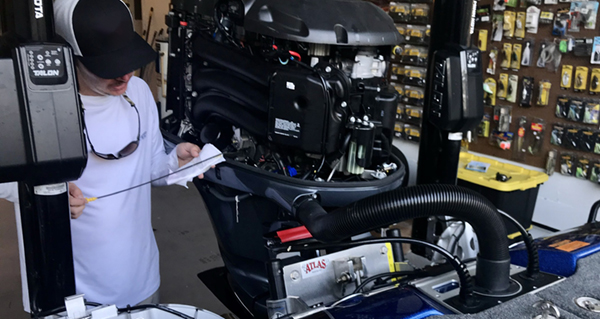
It’s Time to Head to the Water
When starting the drive to the ramp, test the trailer brakes, then pull over after a couple of miles and put your hand near the hubs to feel for excessive heat, or, better yet, use an infrared laser thermometer. Double-check the tires.
It’s a good idea to launch your boat when the ramp isn’t busy, so you can keep it at the dock to perform a couple of checks before casting off.
After making sure the drain plug is in place, launch the boat and tie it to the dock.
First, make sure the engine is shooting a strong stream of water from the tell-tale and watch the temperature and oil pressure gauges closely.
Monitor the voltage gauge to ensure the electrical system is functioning correctly.
There may still be some extra smoke from the fogging oil, but that shouldn’t last more than 5-10 minutes. After a minute, increase the idle speed slightly to speed up the burning of any residual fogging oil.
After the smoke is gone, the engine should run quietly and idle at a steady rpm.
If the boat passes the dockside inspection, it’s time to shove off. For the first run of the season, it’s a good idea not to venture too far from the ramp until you are sure everything is working properly in case you have to crack out the paddle. Remain at a medium idle and test the steering again by turning the wheel hard over several times. If your boat has hydraulic steering, check the hoses, fittings and hydraulic fluid tank for leaks.
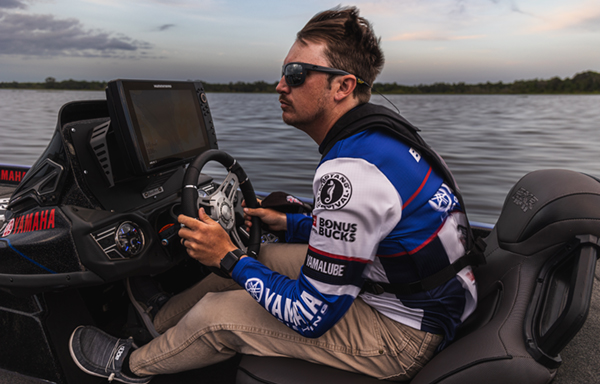
Shift in and out of gear a few times to make sure everything is working correctly. If there is excessive grinding or hesitation, this could indicate a problem that should be checked out by your dealer immediately. It might be as simple as a cable adjustment if it’s a mechanical shift model.
Trim the engine all the way down and lower trim tabs, if you have them, before putting the boat on plane to reduce engine strain. When accelerating, advance the throttle fast enough to avoid lugging the engine. The engine should smoothly increase rpm without hesitating.
After reaching a comfortable planing speed, trim the motor out to reduce drag and watch the temperature, oil pressure and voltage gauges closely and make sure the engine is still shooting a stream of water from the tell-tale.
Signs there may be an issue:
It’s a good idea to test and document a boat’s performance periodically, and doing a test on the first run of the year is a good barometer to make sure there’s no issue. Use a stopwatch to time the acceleration to 30 mph, record fuel consumption at various rpm, and, after a thorough warm-up, go to wide-open throttle and record the top speed and rpm. If you have done tests during the previous season, compare the data. Indicators like increased fuel consumption or lower top speed could signal there’s a problem.
After putting the boat through its paces, idle for a while, then shut the engine off. Do a little fishing or have a snack and let the engine cool down. Then fire up the motor and note any hesitation when restarting; it should fire-up quickly.
If everything checks out, enjoy the first day of the season on the water, a.k.a. the best day of the year and don’t forget to use sunscreen.
Back to Blue Life
Use a pre-first-trip checklist to make sure nothing gets overlooked.
- Check the batteries’ voltage and reinstall them on the boat, making sure there’s no corrosion and that the terminals are tight.
- Test every accessory.
- Check all fluids.
- Open the gas fill and smell. If there’s an unusual odor, test the gas before proceeding.
- Open all hatches and check for mildew, mold or signs that critters have taken up residence.
- Detail the boat.
- Pull the prop, inspect for fishing line and make sure the spline is well greased.
- Test the engine trim.
- With the engine cowling off, closely inspect the engine, paying special attention to hoses and wires.
- Leave the cowling off and attach an earmuff or use the flush port and start the motor. Watch for a tell-tale stream and monitor the temperature closely. Look at the engine block while the boat is running for anything out of the ordinary. If you fogged the engine, there will be smoke from the exhaust for a while.
- Turn the wheel to check the steering system.
- Briefly put the boat into forward, then reverse, after making sure everyone is clear of the prop.
- Shut down the engine, remove the water hose and tilt the engine up for travel.
- Put all the safety gear back on board.
- Closely inspect the trailer, focusing on the tires for proper inflation and sidewall cracking.
It’s Time to Head to the Water
When starting the drive to the ramp, test the trailer brakes, then pull over after a couple of miles and put your hand near the hubs to feel for excessive heat, or, better yet, use an infrared laser thermometer. Double-check the tires.
It’s a good idea to launch your boat when the ramp isn’t busy, so you can keep it at the dock to perform a couple of checks before casting off.
After making sure the drain plug is in place, launch the boat and tie it to the dock.
First, make sure the engine is shooting a strong stream of water from the tell-tale and watch the temperature and oil pressure gauges closely.
Monitor the voltage gauge to ensure the electrical system is functioning correctly.
There may still be some extra smoke from the fogging oil, but that shouldn’t last more than 5-10 minutes. After a minute, increase the idle speed slightly to speed up the burning of any residual fogging oil.
After the smoke is gone, the engine should run quietly and idle at a steady rpm.
If the boat passes the dockside inspection, it’s time to shove off. For the first run of the season, it’s a good idea not to venture too far from the ramp until you are sure everything is working properly in case you have to crack out the paddle. Remain at a medium idle and test the steering again by turning the wheel hard over several times. If your boat has hydraulic steering, check the hoses, fittings and hydraulic fluid tank for leaks.
Shift in and out of gear a few times to make sure everything is working correctly. If there is excessive grinding or hesitation, this could indicate a problem that should be checked out by your dealer immediately. It might be as simple as a cable adjustment if it’s a mechanical shift model.
Trim the engine all the way down and lower trim tabs, if you have them, before putting the boat on plane to reduce engine strain. When accelerating, advance the throttle fast enough to avoid lugging the engine. The engine should smoothly increase rpm without hesitating.
After reaching a comfortable planing speed, trim the motor out to reduce drag and watch the temperature, oil pressure and voltage gauges closely and make sure the engine is still shooting a stream of water from the tell-tale.
Signs there may be an issue:
- Excessive vibration
- Stalling
- Fluctuating engine rpm at idle
- Any unusual sound, such as rattling or knocking
It’s a good idea to test and document a boat’s performance periodically, and doing a test on the first run of the year is a good barometer to make sure there’s no issue. Use a stopwatch to time the acceleration to 30 mph, record fuel consumption at various rpm, and, after a thorough warm-up, go to wide-open throttle and record the top speed and rpm. If you have done tests during the previous season, compare the data. Indicators like increased fuel consumption or lower top speed could signal there’s a problem.
After putting the boat through its paces, idle for a while, then shut the engine off. Do a little fishing or have a snack and let the engine cool down. Then fire up the motor and note any hesitation when restarting; it should fire-up quickly.
If everything checks out, enjoy the first day of the season on the water, a.k.a. the best day of the year and don’t forget to use sunscreen.
Back to Blue Life