
When it comes to consistently catching fish, it’s not about how far you can cast or the latest lures. The trick to being successful revolves around your ability to find fish. Understanding some basic fish behavior, structure, and water movements will help you understand the puzzle of fishing so you can put the pieces together and hook up consistently. Consider the following tips before you make your first cast of the day.
Look At a Chart
Every body of water is different, yet they all have similarities that can help you pinpoint productive areas. Predatory fish like largemouth bass, crappie, trout, and pike, prefer to hunt from ambush points where they can hide without expending a lot of energy. Look at a chart of the body of water you plan to fish, either on a chartplotter, online or an old-school paper chart if you can find one, and focus on edges, deepwater holes, inlets, and points where two shoals come together. Hungry predators will key-in on these areas and give you a starting point.
Once you note a few areas on the chart to target, hit the water and keep an eye out for other cues.
Follow the Current
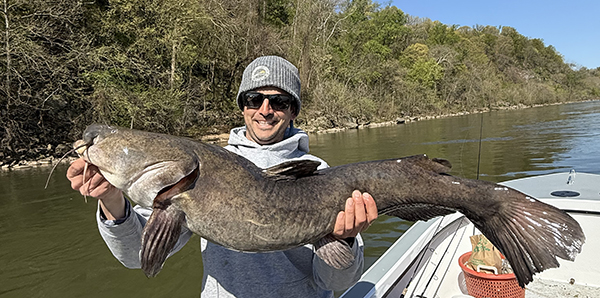
If you’re fishing a river or tidal creek, current is a big indicator to help you find fish. Fish are lazy by nature — they don’t want to burn energy fighting the current all day. They want to hide out and wait for food to drift past. Big fish will set up in current breaks or eddies that swirl behind large boulders or bridge pilings.
Look for fish stationed in these areas as well as downstream of logs. Predators will patiently wait in these low-current zones for quick snacks.
Look for visible seams in the current that resemble a line on the surface where moving water meets calmer water. That seam is a highway for baitfish, and predators know it. Cast along the edge of that seam, not in the middle of the fastest current, and not in dead-still water either. The transition zone is where the action happens.
Scan for Nervous Water
Some spring-fed lakes will have a bit of current, but it’s not like a river, so you have to look for different signs on the surface to make the dinner bell ring. Once you start fishing, keep an eye out for “nervous water.” This phrase refers to subtle rippling, dimpling, or other disturbances that look like little boat wakes on an otherwise calm surface. Nervous water signals baitfish bunched up and on the move, a tip-off that something bigger is pushing them from below or making them a bit freaked out.
Bubbles rising steadily to the surface can mean fish are feeding on the bottom, rooting around in sediment or vegetation for food. If you see a steady stream of bubbles, make a cast with a weighted jig or soft plastic and let it sink before you start to work it.
Don’t forget to look up. Ospreys, gulls, and terns are an angler’s best friend when looking for fish. Circling birds indicate a potential body of bait. Once they start diving in the water, you know they’re locked on baitfish being driven to the surface by predators. If you see birds working an area, that’s not a coincidence — get over there and make a cast.
Pay Attention to Temperature
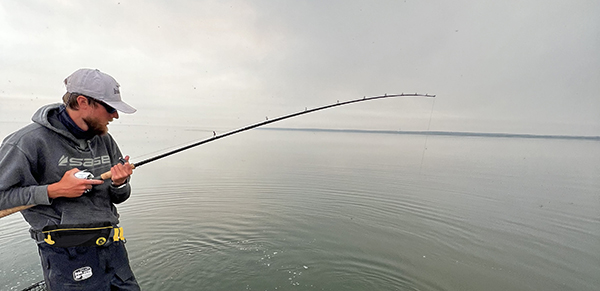
Fish are cold-blooded, and water temperature determines where they hold, how active they are, and what they’re willing to eat. In spring and fall, look for warmer pockets such as shallow shorelines that get more sun exposure, dark bottoms that absorb heat, or areas protected from wind. Fish will often stack up in these warmer zones because their metabolism runs better there.
In summer, the opposite is true. Look for cooler water in deep holes, and shaded banks, or areas with better oxygen exchange like riffles and drop-offs. If your boat’s electronics don’t show the water temp, you can purchase a cheap floating thermometer. Even a one- or two-degree temperature break can be the difference maker between a skunk and a trophy day.
Structure is Key
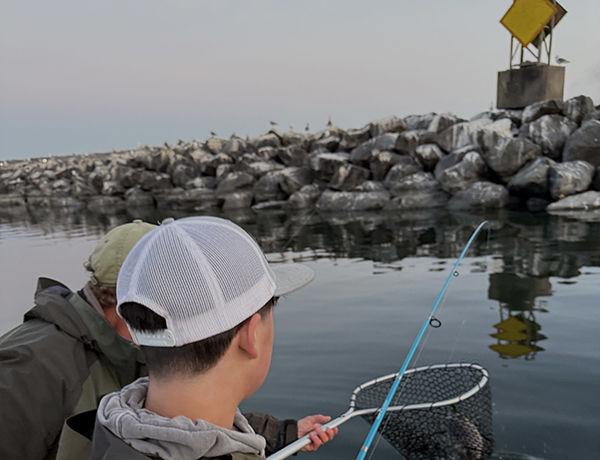
Always pay attention to structure, and how it relates to game fish when fishing. Big fish prefer to hunt around docks, rock piles, grass lines, channel markers, sunken trees, and drop-offs that provide a place to ambush prey and hide from predators of their own. Structure along a bank, or even in the middle of a lake, is always worth a cast.
Cover, including shaded waters under a bridge, lilypads and floating vegetation, or submerged brush will provide protection for hunting fish. On bright, sunny days, fish often push tight to cover. Stained or murky water tends to push fish shallower since they rely less on sight and more on vibration and scent. Fish will push deeper in clear water since they’re more cautious about being seen.
Depth changes and dropoffs are key areas to work when looking for fish. A basic fishfinder can help you unlock the secrets of underwater structure while forward-facing sonar takes it to an entirely different level. Any edge, ledge, or hump in an otherwise flat body of water will concentrate fish because it gives them quick access to shallow feeding grounds and deeper water for safety.
Time, Seasons and Moon
Fish activity varies throughout the day. Early morning and late evening — the low-light hours — are typically the most active feeding windows, especially in warmer months when fish retreat to deeper, cooler water during the heat of the afternoon. Midday often calls for fishing deeper structure or shaded cover.
Moonphase is another key indicator, and many anglers look at solunar tables, which also factor in the sun’s position, to figure out the best time of day to fish. There are a ton of apps out there to help you decipher solunar tables, but I find asking ChatGPT is the fastest way to pinpoint the best fishing times for your waters.
Fish behavior changes with the seasons. Spring often pushes fish shallow to spawn. Summer scatters them between shallow low-light feeding and deep daytime holding. Fall triggers aggressive feeding to bulk up for winter. Winter slows everything down, with fish
holding in deep, stable water and needing a slower presentation.
Putting It Together
Reading the water is a skill that improves every single time you leave the launch ramp or dock. The more time you spend on the water, the easier it is to spot the subtleties that will help you find more fish.
Before you make a cast, slow down and check the current, look for nervous water and birds, consider the time of day and season, and think about the species you’re targeting and their favorite type of structure. Do that, and your first cast of the day won’t be a blind guess, it’ll be a calculated decision backed by everything the water tells you.
Back to Blue Life
Look At a Chart
Every body of water is different, yet they all have similarities that can help you pinpoint productive areas. Predatory fish like largemouth bass, crappie, trout, and pike, prefer to hunt from ambush points where they can hide without expending a lot of energy. Look at a chart of the body of water you plan to fish, either on a chartplotter, online or an old-school paper chart if you can find one, and focus on edges, deepwater holes, inlets, and points where two shoals come together. Hungry predators will key-in on these areas and give you a starting point.
Once you note a few areas on the chart to target, hit the water and keep an eye out for other cues.
Follow the Current
If you’re fishing a river or tidal creek, current is a big indicator to help you find fish. Fish are lazy by nature — they don’t want to burn energy fighting the current all day. They want to hide out and wait for food to drift past. Big fish will set up in current breaks or eddies that swirl behind large boulders or bridge pilings.
Look for fish stationed in these areas as well as downstream of logs. Predators will patiently wait in these low-current zones for quick snacks.
Look for visible seams in the current that resemble a line on the surface where moving water meets calmer water. That seam is a highway for baitfish, and predators know it. Cast along the edge of that seam, not in the middle of the fastest current, and not in dead-still water either. The transition zone is where the action happens.
Scan for Nervous Water
Some spring-fed lakes will have a bit of current, but it’s not like a river, so you have to look for different signs on the surface to make the dinner bell ring. Once you start fishing, keep an eye out for “nervous water.” This phrase refers to subtle rippling, dimpling, or other disturbances that look like little boat wakes on an otherwise calm surface. Nervous water signals baitfish bunched up and on the move, a tip-off that something bigger is pushing them from below or making them a bit freaked out.
Bubbles rising steadily to the surface can mean fish are feeding on the bottom, rooting around in sediment or vegetation for food. If you see a steady stream of bubbles, make a cast with a weighted jig or soft plastic and let it sink before you start to work it.
Don’t forget to look up. Ospreys, gulls, and terns are an angler’s best friend when looking for fish. Circling birds indicate a potential body of bait. Once they start diving in the water, you know they’re locked on baitfish being driven to the surface by predators. If you see birds working an area, that’s not a coincidence — get over there and make a cast.
Pay Attention to Temperature
Fish are cold-blooded, and water temperature determines where they hold, how active they are, and what they’re willing to eat. In spring and fall, look for warmer pockets such as shallow shorelines that get more sun exposure, dark bottoms that absorb heat, or areas protected from wind. Fish will often stack up in these warmer zones because their metabolism runs better there.
In summer, the opposite is true. Look for cooler water in deep holes, and shaded banks, or areas with better oxygen exchange like riffles and drop-offs. If your boat’s electronics don’t show the water temp, you can purchase a cheap floating thermometer. Even a one- or two-degree temperature break can be the difference maker between a skunk and a trophy day.
Structure is Key
Always pay attention to structure, and how it relates to game fish when fishing. Big fish prefer to hunt around docks, rock piles, grass lines, channel markers, sunken trees, and drop-offs that provide a place to ambush prey and hide from predators of their own. Structure along a bank, or even in the middle of a lake, is always worth a cast.
Cover, including shaded waters under a bridge, lilypads and floating vegetation, or submerged brush will provide protection for hunting fish. On bright, sunny days, fish often push tight to cover. Stained or murky water tends to push fish shallower since they rely less on sight and more on vibration and scent. Fish will push deeper in clear water since they’re more cautious about being seen.
Depth changes and dropoffs are key areas to work when looking for fish. A basic fishfinder can help you unlock the secrets of underwater structure while forward-facing sonar takes it to an entirely different level. Any edge, ledge, or hump in an otherwise flat body of water will concentrate fish because it gives them quick access to shallow feeding grounds and deeper water for safety.
Time, Seasons and Moon
Fish activity varies throughout the day. Early morning and late evening — the low-light hours — are typically the most active feeding windows, especially in warmer months when fish retreat to deeper, cooler water during the heat of the afternoon. Midday often calls for fishing deeper structure or shaded cover.
Moonphase is another key indicator, and many anglers look at solunar tables, which also factor in the sun’s position, to figure out the best time of day to fish. There are a ton of apps out there to help you decipher solunar tables, but I find asking ChatGPT is the fastest way to pinpoint the best fishing times for your waters.
Fish behavior changes with the seasons. Spring often pushes fish shallow to spawn. Summer scatters them between shallow low-light feeding and deep daytime holding. Fall triggers aggressive feeding to bulk up for winter. Winter slows everything down, with fish
holding in deep, stable water and needing a slower presentation.
Putting It Together
Reading the water is a skill that improves every single time you leave the launch ramp or dock. The more time you spend on the water, the easier it is to spot the subtleties that will help you find more fish.
Before you make a cast, slow down and check the current, look for nervous water and birds, consider the time of day and season, and think about the species you’re targeting and their favorite type of structure. Do that, and your first cast of the day won’t be a blind guess, it’ll be a calculated decision backed by everything the water tells you.
Back to Blue Life