

At first glance, the story of Rodrigo Salles might read like a familiar tale: a boy learns to fish, grows up, and turns passion into profession. Step into the depths of the Amazon, however, where his life’s work has unfolded, and it becomes something far more complex. It is a story of preservation, partnership, and a redefinition of sustainable tourism.
Salles, a 49-year-old Brazilian civil and environmental engineer, did not begin his career in remote jungles or indigenous territories. Like many anglers, he started beside someone who mattered. His grandfather introduced him to fishing along rivers that wound through coffee plantations, instilling not just a skill but a philosophy rooted in respect for nature, for people, and for place.
“That was always there,” Salles said. “The idea that being outdoors was not just recreation, it was a responsibility.”
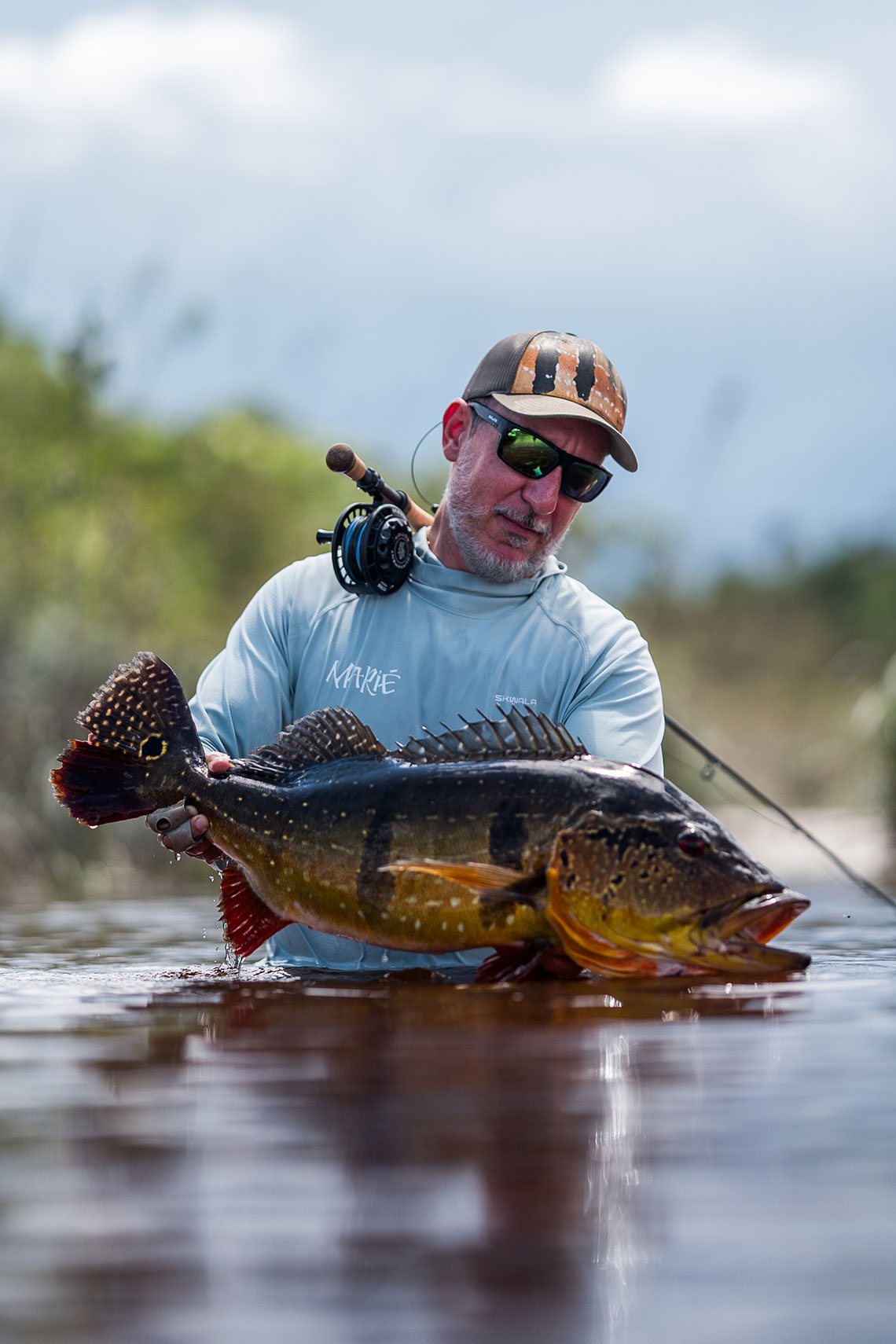
For years, he followed a more conventional path, working in civil engineering on construction projects. The deeper he moved into that world, the stronger the pull back to the water became. Eventually, the decision was unavoidable. He did not just want to fish. He wanted to build a life around it.
That turning point came in 2003 during a trip to Argentina where he met Marcelo Perez. At the time, Argentina’s fly fishing identity was largely defined by trout and salmon. Salles became a friend of Perez who saw something different at that time. They recognized an opportunity to create expedition-style fishing experiences that pushed beyond the expected. It marked the beginning of Untamed Angling™ a company built not on convenience but on exploration.
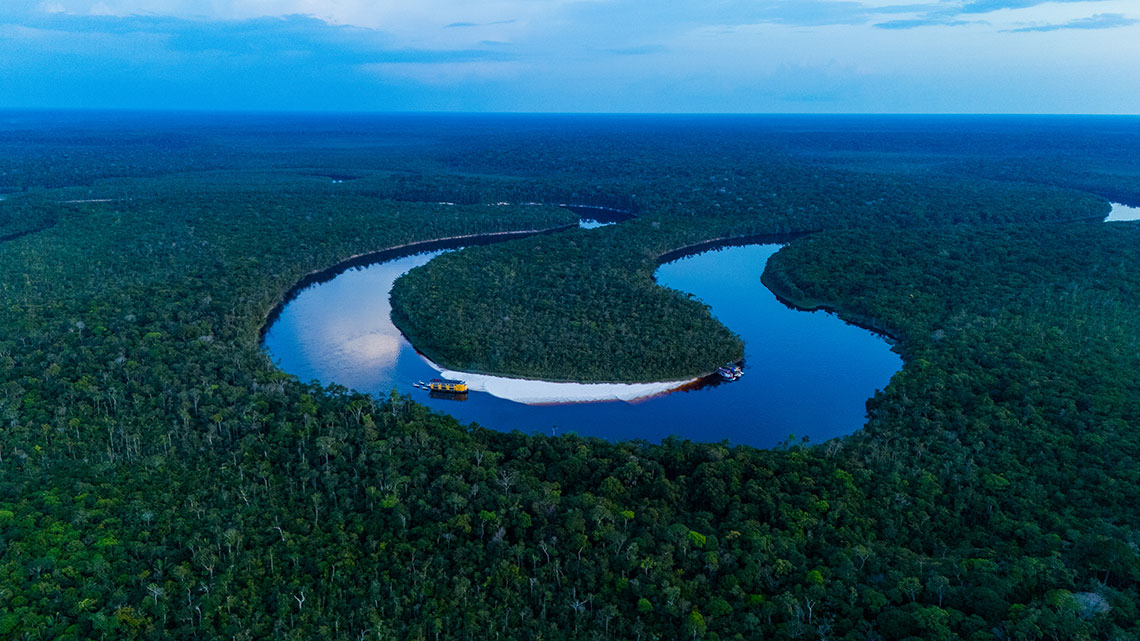
From Argentina, their vision expanded north into the Amazon basin. What they found was both extraordinary and sobering. Vast stretches of water had already been impacted by illegal mining and deforestation. The most pristine rivers, those still teeming with life, were largely confined to national parks or indigenous lands. That realization forced a fundamental question. How do you operate in places like this without becoming part of the problem?
The answer reshaped everything.
Rather than building around or displacing indigenous communities, Perez, Salles and their team chose to build with them. What followed was not a quick rollout, but a deliberate process defined by years of listening, learning, and earning trust. Their first joint venture with an indigenous community launched in 2007 after extensive groundwork to understand cultural dynamics, social structures, and daily life in the Amazon.
Today, Untamed Angling™ operates in partnership with eight indigenous ethnic groups across Brazil and Bolivia, spanning 56 native villages and impacting roughly 5,000 people. Each destination is shaped by its own traditions and leadership. There is no one size fits all model, only a shared framework grounded in collaboration. At the heart of that framework is knowledge exchange.
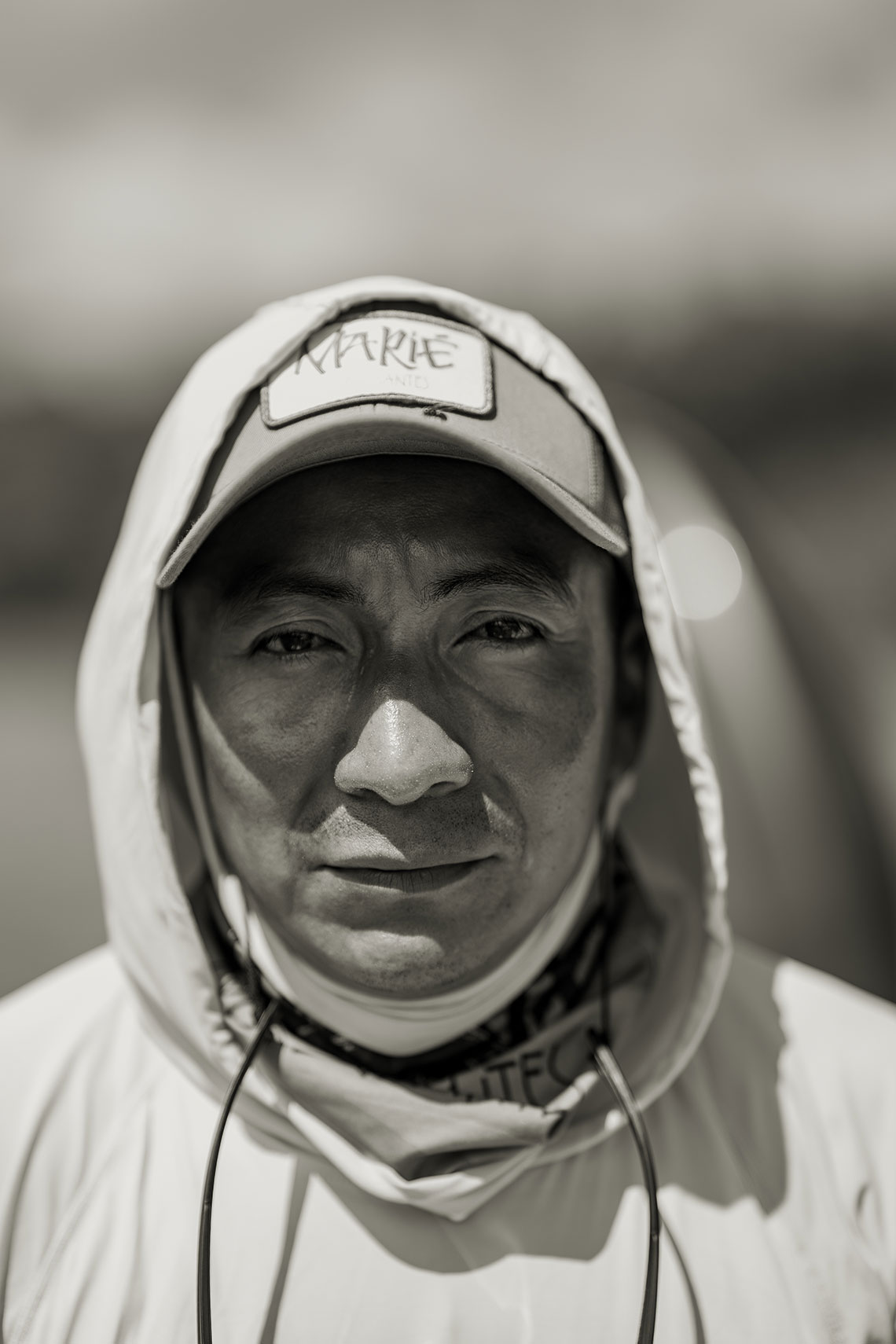
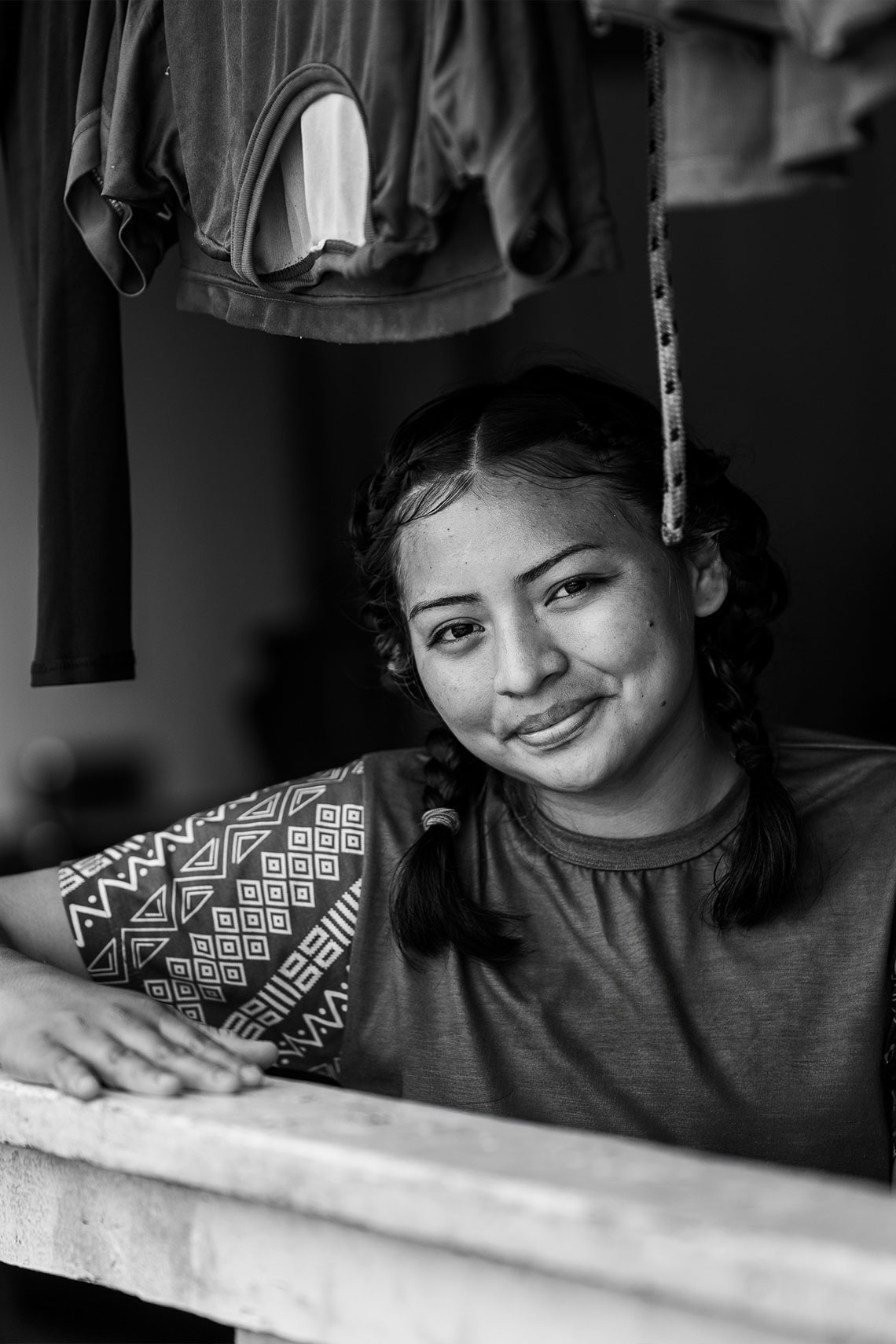
Indigenous communities bring something no outsider can replicate, a deep and generational understanding of the land and water. They read subtle ecological signals, track seasonal shifts, and know the rivers in ways that no textbook can teach. What they often lack is experience with fly fishing or tourism.
“That is where we come in,” Salles explained. “It is not about replacing anything. It is about adding to what already exists.”
Guides are trained not only in fly fishing techniques but also in language, ecology, and hospitality. The long-term vision includes a dedicated native guide school, equipping future generations with the tools to build careers without leaving their communities. It is a gradual process, nearly two decades in the making, and one that requires a shift in mindset on both sides.
.jpg "fishingboat-(2).jpg")
For many indigenous communities, the concept of catch and release fishing is entirely new. Fishing has traditionally been tied to sustenance, not sport. Introducing the idea that fish can be caught and returned to the water, and that doing so can generate sustainable income, takes time.
Over time, and long-term commitments, the results speak for themselves.
Communities begin to see their rivers, forests, and traditions not as resources to be extracted, but as assets to be protected. Responsible tourism creates a path to economic stability without sacrificing land, culture, or autonomy.
The impact is tangible. Villages gain access to healthcare, education, and technology such as solar power, all while maintaining control of their territories. Younger generations who might otherwise leave for urban centers now have a reason to stay. In that sense, the project is about more than fishing. It is about preserving culture.
“It is a way to live from the jungle without destroying the jungle,” Salles said.
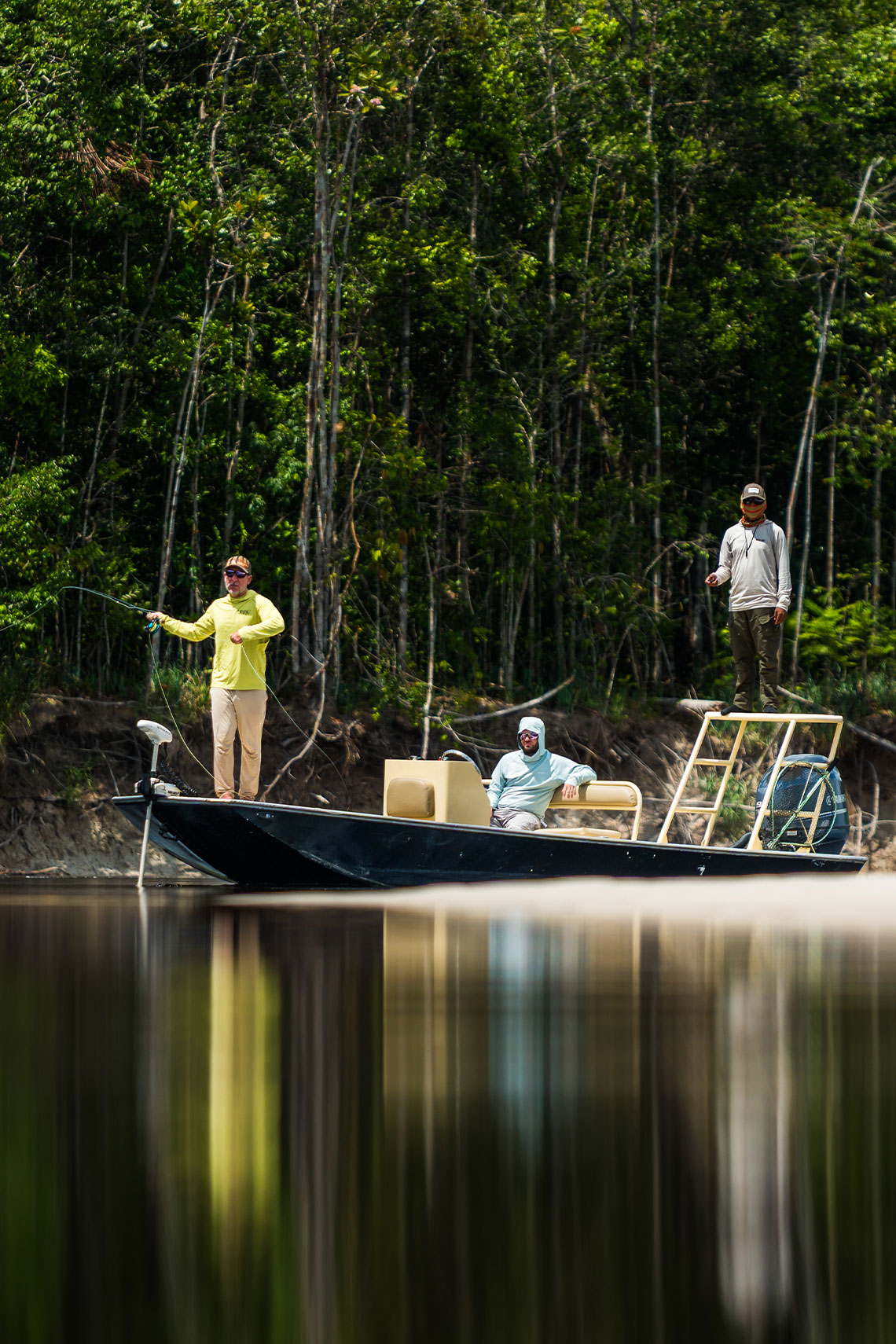
For visiting anglers, the experience is as immersive as it is remote. Logistics are designed to feel seamless, even when the journey is anything but simple. Some destinations require hours of travel by floatplane, up to 600 miles from the nearest major hub, followed by additional transfers deep into the wilderness.
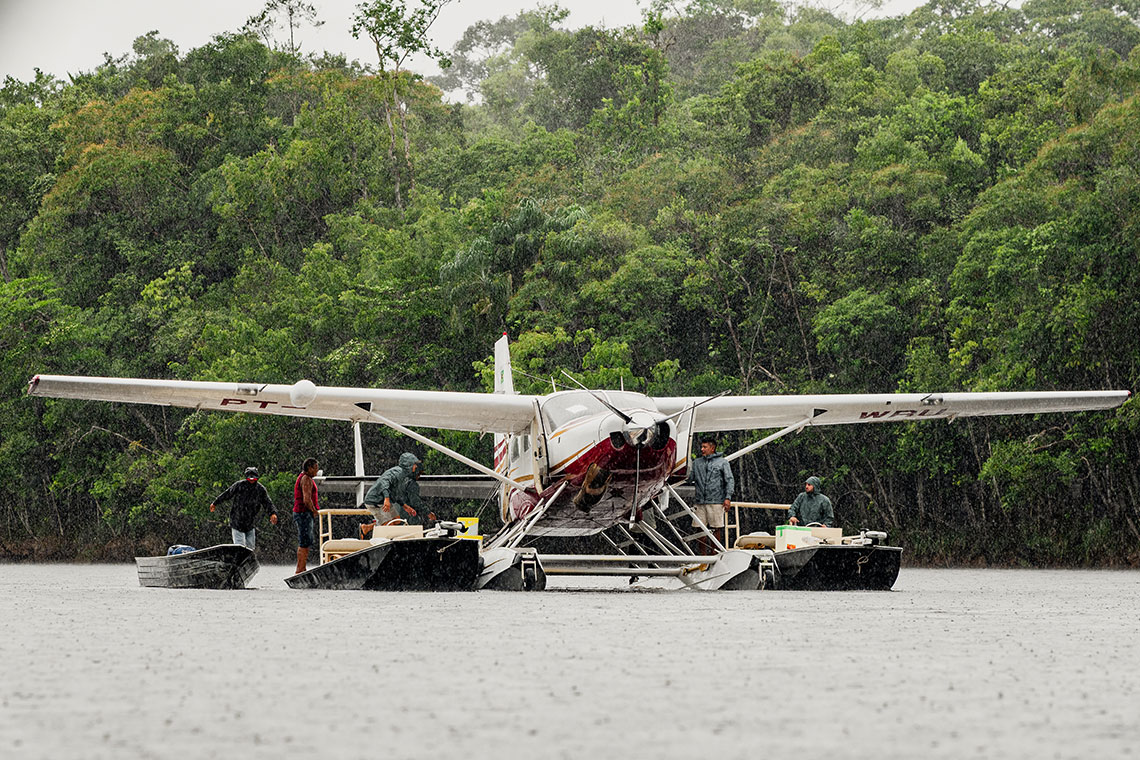
Once there, guests spend six full days fishing, typically on a Sunday to Sunday schedule. Accommodations range from floating lodges to high end jungle camps, blending comfort with isolation. Meals, guides, and equipment are all included, allowing guests to focus entirely on the experience.
What sets these trips apart is not just the fishing, it is the perspective. Each outing pairs anglers with both a professional guide and an indigenous expert. One provides technical instruction while the other offers a window into the ecosystem by tracking wildlife, reading water, and sharing knowledge passed down through generations. It is a dual guided experience that reflects the broader philosophy of Untamed Angling™, two worlds working together without one overshadowing the other.
Behind the scenes, operating in such remote environments demands reliability above all else. Equipment failures are not just inconvenient, they can be critical. That is where reliable products from Yamaha come into play.
“In the Amazon, it is not about speed or appearance,” Salles said. “It is about trust.”
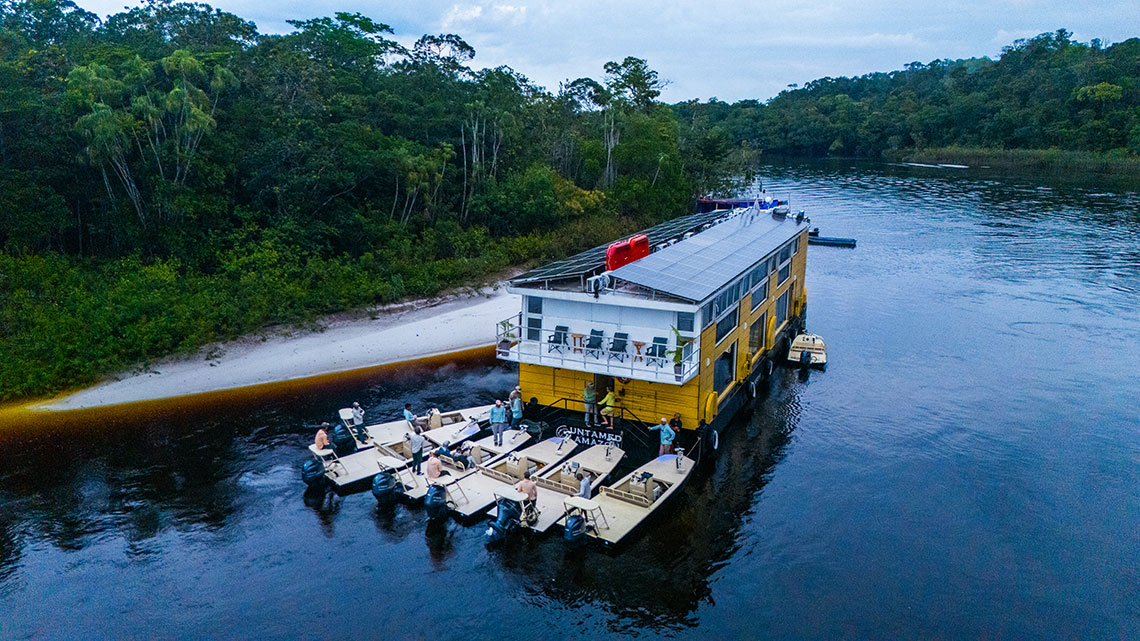
With no access to nearby service centers, engines must perform consistently under demanding conditions, transporting guests, supplies, and staff across vast distances. The Yamaha outboards he’s run over the last decade have proven durable enough to handle the environment, provided they are properly maintained. It is a practical detail, but one that underscores a larger truth. In the Amazon, every decision matters.
Looking back, Salles is quick to acknowledge that the journey has been as much about learning as it has been about building.
“In the beginning, we thought we had more to teach,” he said. “It has been the opposite.”
The lessons learned from indigenous partners about balance, sustainability, and coexistence are not found in books or universities. They are lived experiences refined over centuries, and in many ways, they hold the key to the future.
.jpg "boatbeached-(1).jpg")
As development continues to push into remote regions, pressure on these ecosystems will only increase. Projects like Untamed Angling™ offer an alternative path, one that aligns economic opportunity with environmental stewardship. It is not a fast model, nor is it a simple one. Growth is intentional, measured, and built on trust.
That, Salles believes, is exactly the point.
Success in the Amazon is found in patience, in listening before acting, in partnering rather than imposing, and in understanding that the most valuable knowledge often comes from those who have been there the longest.
What began as a love of fishing has become something far greater, a platform to protect fragile ecosystems, empower indigenous communities, and redefine what it means to explore responsibly. In the quiet moments, standing in a jungle river, that original spark remains, cast after cast, just as it was all those years ago.
For more information about Untamed Angling™, visit https://www.uangling.com/.
This document contains many of Yamaha's valuable trademarks. It may also contain trademarks belonging to other companies. Any references to other companies or their products are for identification purposes only and are not intended to be an endorsement.
REMEMBER to always observe all applicable boating laws. Never drink and drive. Dress properly with a USCG-approved personal floatation device and protective gear.
© 2026 Yamaha Motor Corporation, U.S.A. All rights reserved.