

Research from Georgia Southern University shows how oyster reef restoration can strengthen coastal marshes and protect vital marine habitats. Along Georgia’s tidal rivers, a simple conservation tool is making a measurable difference: oyster shells.
Yamaha Rightwaters™, Georgia Southern University and the Georgia Department of Natural Resources (DNR) launched a collaborative oyster restoration project in 2023 that continues to yield encouraging results. Research now shows that restoring oyster reefs can help coastal marshes expand, stabilize shorelines and strengthen ecosystems that support recreational boating and fishing.
For boaters navigating Georgia’s tidal creeks and estuaries, the findings underscore an important connection between healthy waterways and the habitats surrounding them.
Building a Better Shoreline
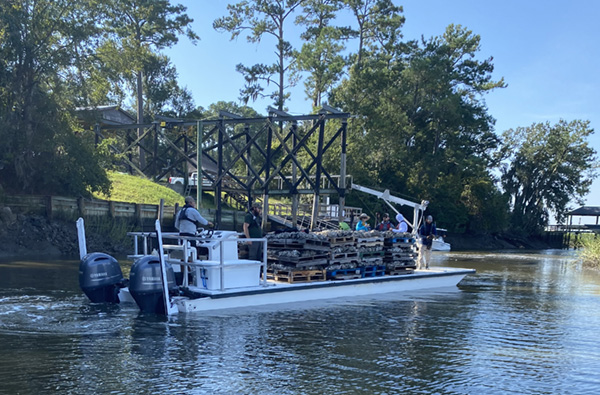
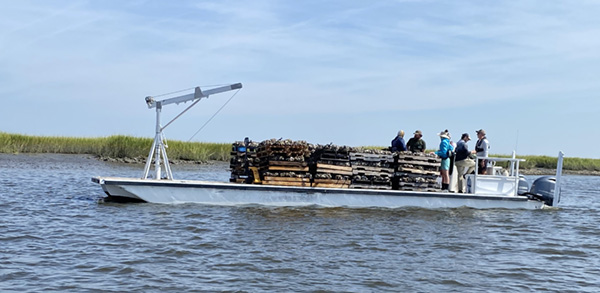
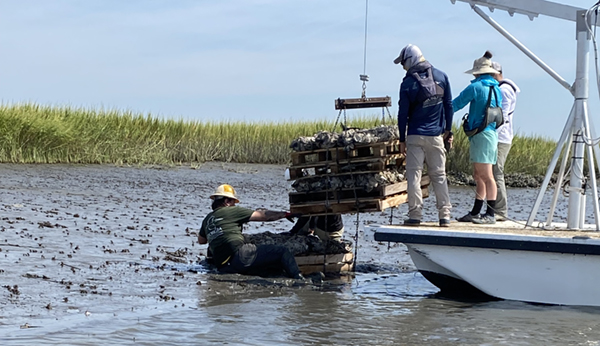
The project began along the North Newport River, where researchers set out to restore oyster habitat and investigate whether newly established reefs could encourage marsh growth. In September 2023, the team deployed approximately six tons of oyster shells along the shoreline. The shells provided hard surfaces where juvenile oysters could attach and grow, eventually creating new reef structures.
Researchers also wanted to understand whether the benefits extended beyond the oysters themselves. Could restored reefs help protect vulnerable shorelines and encourage salt marshes to expand? After 19 months of monitoring, the answer appears promising.
Using aerial imagery collected before and after restoration, researchers compared changes in marsh coverage and shoreline position at restored locations and nearby unrestored control sites. The results, recently published in the scientific journal Diversity, showed measurable differences.
Restored marshes expanded by an average of 47 square meters and migrated more than 1.4 meters seaward toward the oyster shell structures. Control sites showed minimal overall change and greater variability, including periods of habitat loss. On the more exposed eastern shoreline, restored areas gained more than 50 square meters of marsh, while control sites experienced a net loss. Along the southern shoreline, marsh expansion at restored sites was about twice that of control locations, with shoreline migration rates two to three times higher.
“This study provides strong evidence that oyster reef restoration can accelerate marsh expansion and improve stability in dynamic environments such as the Georgia coastline,” said John Carroll, Ph.D., professor of biology at Georgia Southern University. “These insights are essential for developing effective, science-based approaches to conservation and restoration.”
Why It Matters to Boaters
The contributions oysters make to healthy coastal waters are substantial. Redfish, seatrout and many other gamefish use oyster reefs as foraging habitat and shelter. Oysters also filter suspended particles from the water as they feed, contributing to improved water quality.
Their benefits also extend above the waterline. By reducing wave energy and stabilizing sediments, oyster reefs can create favorable conditions for marsh grasses to establish and spread. Those marshes, in turn, provide important nursery habitat for juvenile fish and help protect shorelines against erosion.
For recreational anglers, these interconnected habitats are especially valuable. Marsh edges, tidal creeks and oyster bars are among the productive areas where coastal fish feed and seek shelter.
“Oyster reefs are essential fish habitat, but their value extends beyond the reef itself—helping stabilize shorelines and support marsh growth,” said Cameron Brinton, marine biologist with the Georgia DNR Coastal Resources Division. “By quantifying these benefits, we can better align restoration efforts with partners who may not traditionally prioritize oysters.”
The findings also highlight the potential of living shorelines, which use natural materials and vegetation to protect coastal areas rather than relying exclusively on bulkheads and seawalls.
Conservation Beyond Georgia
For Yamaha Rightwaters, the Georgia project supports a broader commitment to protecting marine environments and the resources that sustain recreational boating. The initiative builds on earlier oyster restoration research conducted with Texas A&M University’s Harte Research Institute and the Coastal Conservation Association in the Gulf. Both efforts examine the ecological benefits of oyster reefs, including their potential contributions to carbon storage. While the Georgia study demonstrates measurable marsh expansion, research continues into how restored oyster systems may contribute to carbon sequestration.
“These results reinforce the value of oyster reef restoration as a nature-based solution for strengthening coastal ecosystems,” said Joshua Grier, Sustainability Program Manager for Yamaha Motor USA. “By supporting marsh growth and improving shoreline resilience, Yamaha Rightwaters can help address habitat loss and advance our understanding of carbon sequestration potential.”
A Foundation for the Future
Georgia’s coast presents unique restoration challenges, including large tidal fluctuations, shifting sediments and exposure to changing environmental conditions. Those factors make locally collected research particularly valuable. By documenting how oyster reef restoration influences marsh growth, researchers are gathering data that can guide future conservation projects along Georgia’s coast and potentially elsewhere.
The findings don’t suggest oyster reefs alone can solve every shoreline erosion problem. However, they demonstrate how relatively straightforward restoration techniques can deliver measurable environmental benefits. For boaters and anglers, the takeaway is clear: Protecting the habitats surrounding coastal waterways helps preserve the fisheries, shorelines and natural environments that make time on the water worthwhile.
Along the North Newport River, that protection is already taking shape, one oyster shell at a time.
Back to Blue Life
Yamaha Rightwaters™, Georgia Southern University and the Georgia Department of Natural Resources (DNR) launched a collaborative oyster restoration project in 2023 that continues to yield encouraging results. Research now shows that restoring oyster reefs can help coastal marshes expand, stabilize shorelines and strengthen ecosystems that support recreational boating and fishing.
For boaters navigating Georgia’s tidal creeks and estuaries, the findings underscore an important connection between healthy waterways and the habitats surrounding them.
Building a Better Shoreline
The project began along the North Newport River, where researchers set out to restore oyster habitat and investigate whether newly established reefs could encourage marsh growth. In September 2023, the team deployed approximately six tons of oyster shells along the shoreline. The shells provided hard surfaces where juvenile oysters could attach and grow, eventually creating new reef structures.
Researchers also wanted to understand whether the benefits extended beyond the oysters themselves. Could restored reefs help protect vulnerable shorelines and encourage salt marshes to expand? After 19 months of monitoring, the answer appears promising.
Using aerial imagery collected before and after restoration, researchers compared changes in marsh coverage and shoreline position at restored locations and nearby unrestored control sites. The results, recently published in the scientific journal Diversity, showed measurable differences.
Restored marshes expanded by an average of 47 square meters and migrated more than 1.4 meters seaward toward the oyster shell structures. Control sites showed minimal overall change and greater variability, including periods of habitat loss. On the more exposed eastern shoreline, restored areas gained more than 50 square meters of marsh, while control sites experienced a net loss. Along the southern shoreline, marsh expansion at restored sites was about twice that of control locations, with shoreline migration rates two to three times higher.
“This study provides strong evidence that oyster reef restoration can accelerate marsh expansion and improve stability in dynamic environments such as the Georgia coastline,” said John Carroll, Ph.D., professor of biology at Georgia Southern University. “These insights are essential for developing effective, science-based approaches to conservation and restoration.”
Why It Matters to Boaters
The contributions oysters make to healthy coastal waters are substantial. Redfish, seatrout and many other gamefish use oyster reefs as foraging habitat and shelter. Oysters also filter suspended particles from the water as they feed, contributing to improved water quality.
Their benefits also extend above the waterline. By reducing wave energy and stabilizing sediments, oyster reefs can create favorable conditions for marsh grasses to establish and spread. Those marshes, in turn, provide important nursery habitat for juvenile fish and help protect shorelines against erosion.
For recreational anglers, these interconnected habitats are especially valuable. Marsh edges, tidal creeks and oyster bars are among the productive areas where coastal fish feed and seek shelter.
“Oyster reefs are essential fish habitat, but their value extends beyond the reef itself—helping stabilize shorelines and support marsh growth,” said Cameron Brinton, marine biologist with the Georgia DNR Coastal Resources Division. “By quantifying these benefits, we can better align restoration efforts with partners who may not traditionally prioritize oysters.”
The findings also highlight the potential of living shorelines, which use natural materials and vegetation to protect coastal areas rather than relying exclusively on bulkheads and seawalls.
Conservation Beyond Georgia
For Yamaha Rightwaters, the Georgia project supports a broader commitment to protecting marine environments and the resources that sustain recreational boating. The initiative builds on earlier oyster restoration research conducted with Texas A&M University’s Harte Research Institute and the Coastal Conservation Association in the Gulf. Both efforts examine the ecological benefits of oyster reefs, including their potential contributions to carbon storage. While the Georgia study demonstrates measurable marsh expansion, research continues into how restored oyster systems may contribute to carbon sequestration.
“These results reinforce the value of oyster reef restoration as a nature-based solution for strengthening coastal ecosystems,” said Joshua Grier, Sustainability Program Manager for Yamaha Motor USA. “By supporting marsh growth and improving shoreline resilience, Yamaha Rightwaters can help address habitat loss and advance our understanding of carbon sequestration potential.”
A Foundation for the Future
Georgia’s coast presents unique restoration challenges, including large tidal fluctuations, shifting sediments and exposure to changing environmental conditions. Those factors make locally collected research particularly valuable. By documenting how oyster reef restoration influences marsh growth, researchers are gathering data that can guide future conservation projects along Georgia’s coast and potentially elsewhere.
The findings don’t suggest oyster reefs alone can solve every shoreline erosion problem. However, they demonstrate how relatively straightforward restoration techniques can deliver measurable environmental benefits. For boaters and anglers, the takeaway is clear: Protecting the habitats surrounding coastal waterways helps preserve the fisheries, shorelines and natural environments that make time on the water worthwhile.
Along the North Newport River, that protection is already taking shape, one oyster shell at a time.
Back to Blue Life