

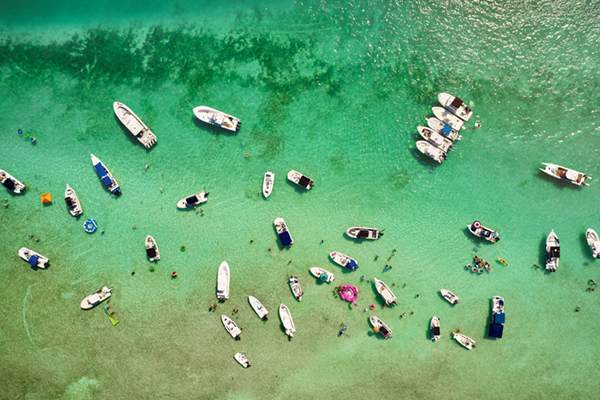
Days at the sand bar are one of the great pleasures of boat ownership. From rafting up with 100 of your closest friends, to posting up on an isolated bank all by yourself, the options are as endless as the fun. What follows is our approach to taking your sandbar boat day game to the next level. This is fun stuff, especially when you get it right.
A Word on Safety
Sand bars are great fun, but they require a couple extra pieces of precaution. Never allow anyone to stand, push, swim or wade near an engaged outboard or rotating propeller.
Your Boat
1. Once you position your boat, consider trimming the motors up. Have a plan for guests to get on or off the boat, explain the best points of entry to your guests, especially those who may not have boating experience around boats.
2. Keep an eye on your passengers, especially when arriving at the sand bar or as you leave. It can be tempting for the kids to want to start playing as soon as possible. But it’s always a great idea to keep everyone who isn’t needed to help position the boat or anchor in place until the boat is stopped and in its final position. The same applies when leaving the sand bar.
3. When leaving the sand bar, don’t operate your outboards until all of your passengers are in the boat. Videos of inexperienced boaters pushing their vessel through shallow water next to an engaged outboard are horrifying.
4. Always take time to read and follow the guidance in your boat and outboard motor owner’s manuals, along with all onboard safety labels, warnings and equipment instructions.
Other Boats
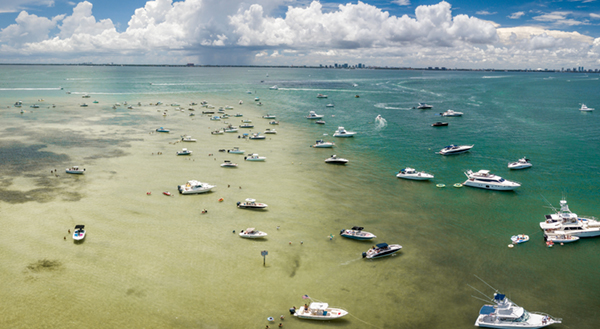
As pleasant as it would be to think that all other boaters will always operate safely and responsibly, that’s not always the case. And there are times and places when a crowded sand bar becomes a free-for-all. Keep an eye on where the kids are playing, especially making sure nobody is swimming or floating in a place that might be exposed to boat traffic or boats coming or going.
Anchoring, Boat Positioning, Tide, and Current
The type of boat you have and the place you take it will dictate the specifics on how you position and anchor your boat. That said, here are general things to consider:
1. Keep an eye on the tide. Many of the best sand bars are exposed only at low tide. If this is the case, show up as the tide is going out—giving yourself enough time to enjoy
the day before the water rises enough to submerge the bank.
On the other hand, make sure that you don’t anchor in place that you can only access on high tide. The internet is full of pictures and videos of boaters stranded on sandbars waiting on the tide to bring enough water to float the boat.
2. Positioning the boat. Your hull type and the specifics of the beach and tide will dictate what is best. But generally speaking, your options include beaching the hull, tying off, or some type of anchoring—a bow anchor and potentially a stern anchor or shallow water anchor or two. Given the range of possibilities, be sure to bring the anchors, plenty of dock line (in case you tie off to something on the beach), and your fenders (in case you raft up). However and wherever you end up, keep an eye on your boat’s position. It may change with the tide.
Be sure your anchor lines are not in a place where they may be run over by a boat that is coming or going from the sand bar. Also, keep an eye on the water level—especially if you’ve beached the boat on a falling tide.
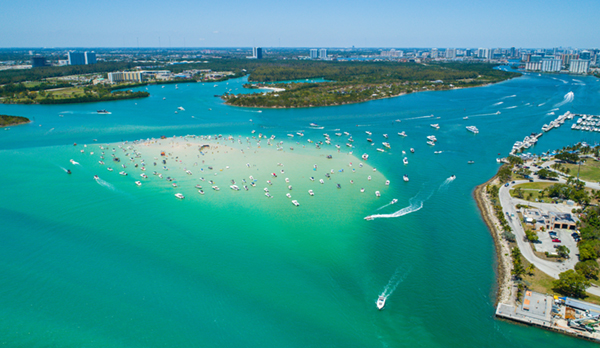
Because tide and timing will not always line up, your best bet is likely to find a number of sandbar options. These can include spots near channels that are only accessible on low tide, sandy beaches that are accessible across tides, or islands that offer a variety of access points.
You can make note of these places as you’re boating throughout the year. Keep track of places where other boaters hang out and see which ones look like the type of experience that is right you and your guests.
Sand Bar Provisions
Now for the fun stuff. Packing for the sand bar involves a combination of making ready for the boat and a beach day all in one.
Coolers- in addition to the contents of your boat cooler, you might consider packing a soft cooler to bring snacks and drinks with you. This will make it easier for kids and passengers, while decreasing the number of times people need to get on and off the boat.
Towels—you’ll want to pack towels for drying, but also a beach blanket type. This will provide a central gathering point for your sandbar time.
Sunscreen- spray sunscreen is great for quick coverage, but can stain boat upholstery. Spray the kids before they get on board. Use non-greasy sunscreen for those smiling faces, and don’t forget the SPF lip balm.
Waterproof speaker—sure, you can crank up your boat’s system, but packing a waterproof, Bluetooth speaker is a great option. This is especially true when you and the youngsters can’t agree on what to listen to.
Floating Mats—Floating mats are great fun. They come in a variety of options and make great focal points for relaxing or swimming around.
Beach toys—you also can’t wrong by bringing sand toys and a small dip net. Even kids that don’t fish like to try to catch little crabs and minnows.
Back to Blue Life
A Word on Safety
Sand bars are great fun, but they require a couple extra pieces of precaution. Never allow anyone to stand, push, swim or wade near an engaged outboard or rotating propeller.
Your Boat
1. Once you position your boat, consider trimming the motors up. Have a plan for guests to get on or off the boat, explain the best points of entry to your guests, especially those who may not have boating experience around boats.
2. Keep an eye on your passengers, especially when arriving at the sand bar or as you leave. It can be tempting for the kids to want to start playing as soon as possible. But it’s always a great idea to keep everyone who isn’t needed to help position the boat or anchor in place until the boat is stopped and in its final position. The same applies when leaving the sand bar.
3. When leaving the sand bar, don’t operate your outboards until all of your passengers are in the boat. Videos of inexperienced boaters pushing their vessel through shallow water next to an engaged outboard are horrifying.
4. Always take time to read and follow the guidance in your boat and outboard motor owner’s manuals, along with all onboard safety labels, warnings and equipment instructions.
Other Boats
As pleasant as it would be to think that all other boaters will always operate safely and responsibly, that’s not always the case. And there are times and places when a crowded sand bar becomes a free-for-all. Keep an eye on where the kids are playing, especially making sure nobody is swimming or floating in a place that might be exposed to boat traffic or boats coming or going.
Anchoring, Boat Positioning, Tide, and Current
The type of boat you have and the place you take it will dictate the specifics on how you position and anchor your boat. That said, here are general things to consider:
1. Keep an eye on the tide. Many of the best sand bars are exposed only at low tide. If this is the case, show up as the tide is going out—giving yourself enough time to enjoy
the day before the water rises enough to submerge the bank.
On the other hand, make sure that you don’t anchor in place that you can only access on high tide. The internet is full of pictures and videos of boaters stranded on sandbars waiting on the tide to bring enough water to float the boat.
2. Positioning the boat. Your hull type and the specifics of the beach and tide will dictate what is best. But generally speaking, your options include beaching the hull, tying off, or some type of anchoring—a bow anchor and potentially a stern anchor or shallow water anchor or two. Given the range of possibilities, be sure to bring the anchors, plenty of dock line (in case you tie off to something on the beach), and your fenders (in case you raft up). However and wherever you end up, keep an eye on your boat’s position. It may change with the tide.
Be sure your anchor lines are not in a place where they may be run over by a boat that is coming or going from the sand bar. Also, keep an eye on the water level—especially if you’ve beached the boat on a falling tide.
Because tide and timing will not always line up, your best bet is likely to find a number of sandbar options. These can include spots near channels that are only accessible on low tide, sandy beaches that are accessible across tides, or islands that offer a variety of access points.
You can make note of these places as you’re boating throughout the year. Keep track of places where other boaters hang out and see which ones look like the type of experience that is right you and your guests.
Sand Bar Provisions
Now for the fun stuff. Packing for the sand bar involves a combination of making ready for the boat and a beach day all in one.
Coolers- in addition to the contents of your boat cooler, you might consider packing a soft cooler to bring snacks and drinks with you. This will make it easier for kids and passengers, while decreasing the number of times people need to get on and off the boat.
Towels—you’ll want to pack towels for drying, but also a beach blanket type. This will provide a central gathering point for your sandbar time.
Sunscreen- spray sunscreen is great for quick coverage, but can stain boat upholstery. Spray the kids before they get on board. Use non-greasy sunscreen for those smiling faces, and don’t forget the SPF lip balm.
Waterproof speaker—sure, you can crank up your boat’s system, but packing a waterproof, Bluetooth speaker is a great option. This is especially true when you and the youngsters can’t agree on what to listen to.
Floating Mats—Floating mats are great fun. They come in a variety of options and make great focal points for relaxing or swimming around.
Beach toys—you also can’t wrong by bringing sand toys and a small dip net. Even kids that don’t fish like to try to catch little crabs and minnows.
Back to Blue Life