

Everybody loves the first part of the boat day. The part where you head out on the water with your friends and family and enjoy your favorite brand of on the water recreation. There is a second part of the boat day, however, that is equally important—if less exciting. To keep your boat looking and running the way it should, you’ve got to clean, organize, and check it over after each use.
What follows is our take on the post-boat-day process. While the specifics of your process depend on what type of boat and engine you have, and where and how you use it, this will provide some inspiration. Be sure to check your boat and outboard owner’s manuals for any model-specific care, maintenance or flushing instructions.
Clean Up
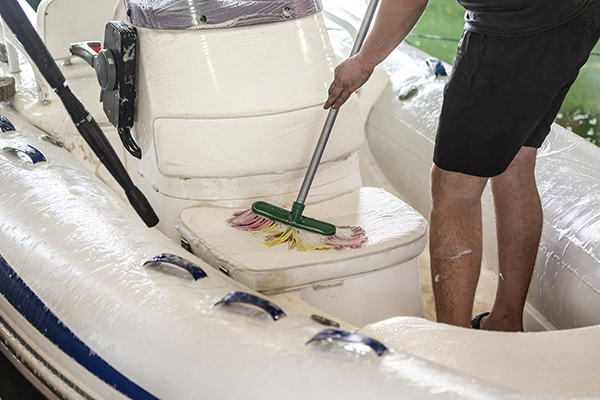
No matter how and where you use your boat, after a day on the water you’ll want to clean it. If you’re boating in saltwater, thoroughly washing and rinsing the boat and all metal surfaces is really, really important. And don’t forget about your rods, reels, and tackle—rinse all of this thoroughly too.
Cleaning Throughout the Day
The process of cleaning starts long before you touch the boat dock. Your best approach involves cleaning as you go-- taking care to wash, wipe, or rinse fish blood, scales, grease, food crumbs, or sunscreen as it spills.
Not only will this keep stains from setting— saving you elbow grease later (dried slime or blood are much tougher to remove once they’ve hardened)- but it can keep the deck from getting slippery. Cleaning things as you go is best practice for a variety of reasons.
Keep a bucket and a rag ready. Wipe spots away with the wet rag. For larger spills, just wash them away with a bucket of water.
Once You Get Back to the Dock
Once you get back to the dock, it’s time for a more thorough washdown. Here are some general supplies that will make themselves useful:
If you’ve used fish boxes, clean these with your cleaner to ensure that no smell remains. Take special care to dry areas that are enclosed, as this is the best prevention of mildew spots and musty smells.
If you trailer your boat home, self-service carwashes—the type with bays that you can pull into and use the powerful spray nozzles—can be really great. The powerful spray arms are great for rinsing the trailer, tires, and the parts of your truck that touched saltwater. If you have a bass boat with carpet, the vacuums at these washes are great ways to clean the carpets of any remaining crumbs or particles.
Flushing the Motors
If you’ve just used your boat in saltwater, you’ll want to flush your outboards. While the specifics of your approach vary by model (check your user’s manual for best practices), here are some general rules to keep in mind:
Cleaning, Organizing and Preparing for Your Next Trip
Perhaps the best way to prepare for your next boat day is to create a consistent system for cleaning and organizing the boat after each use. Here are some tips for doing that:
Back to Blue Life
What follows is our take on the post-boat-day process. While the specifics of your process depend on what type of boat and engine you have, and where and how you use it, this will provide some inspiration. Be sure to check your boat and outboard owner’s manuals for any model-specific care, maintenance or flushing instructions.
Clean Up
No matter how and where you use your boat, after a day on the water you’ll want to clean it. If you’re boating in saltwater, thoroughly washing and rinsing the boat and all metal surfaces is really, really important. And don’t forget about your rods, reels, and tackle—rinse all of this thoroughly too.
Cleaning Throughout the Day
The process of cleaning starts long before you touch the boat dock. Your best approach involves cleaning as you go-- taking care to wash, wipe, or rinse fish blood, scales, grease, food crumbs, or sunscreen as it spills.
Not only will this keep stains from setting— saving you elbow grease later (dried slime or blood are much tougher to remove once they’ve hardened)- but it can keep the deck from getting slippery. Cleaning things as you go is best practice for a variety of reasons.
Keep a bucket and a rag ready. Wipe spots away with the wet rag. For larger spills, just wash them away with a bucket of water.
Once You Get Back to the Dock
Once you get back to the dock, it’s time for a more thorough washdown. Here are some general supplies that will make themselves useful:
- A bucket or two—if you can get your hands on a 3.5-gallon bucket, these are great. They’re also easier for kids to handle
- Specialty boat wash—You want something that is formulated to clean gelcoat without stripping or damaging it. You’ll also want to ensure that the soap doesn’t damage or degrade fishing line.
- Stronger cleaning agent for fish boxes.
- Brushes and mitts:
- A stiff brush—to work set-in stains.
- A soft brush- to soap up the deck and gunwales.
- A wash mitt or two—these are ideal for rounded surfaces, cleaning t-tips,
enclosures, windows, seating, and consoles. - Plenty of chamoises and a squeegee or two for drying the boat.
If you’ve used fish boxes, clean these with your cleaner to ensure that no smell remains. Take special care to dry areas that are enclosed, as this is the best prevention of mildew spots and musty smells.
If you trailer your boat home, self-service carwashes—the type with bays that you can pull into and use the powerful spray nozzles—can be really great. The powerful spray arms are great for rinsing the trailer, tires, and the parts of your truck that touched saltwater. If you have a bass boat with carpet, the vacuums at these washes are great ways to clean the carpets of any remaining crumbs or particles.
Flushing the Motors
If you’ve just used your boat in saltwater, you’ll want to flush your outboards. While the specifics of your approach vary by model (check your user’s manual for best practices), here are some general rules to keep in mind:
- Never run your engine without water—connect the hose to the input and turn on the water before cranking your motor.
- Never rev your engines with the muffs.
- Shut down the engine before turning off or disconnecting the water.
Cleaning, Organizing and Preparing for Your Next Trip
Perhaps the best way to prepare for your next boat day is to create a consistent system for cleaning and organizing the boat after each use. Here are some tips for doing that:
- Towels— if you have a dedicated set of boat towels, and keep them in a dry bag, you can easily take them on and off the boat. If you’ve used them, just wash, dry, fold, and put them back in the bag ready for next use. If you haven’t used them, the dry bag has kept them from getting wet. You can take the same approach for life jackets and other reusable boat items.
- Electronics—if you have removable multi-function displays, unplug, remove, wipe them down, and dry them. Store in your boat bag, ready for next use.
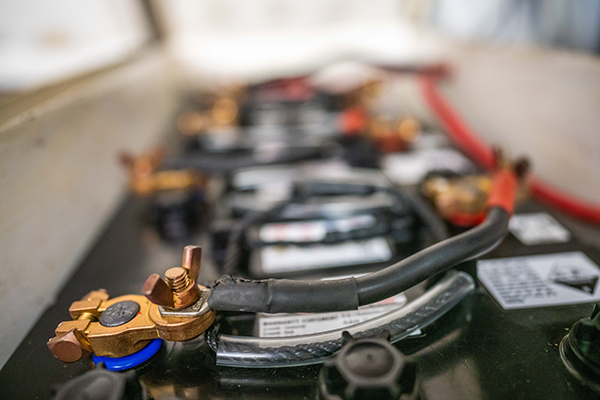
- Batteries- Maintenance and Charging-after each use, take note of battery levels. This will help you get an idea of how much runtime you might expect from each charge.
Back to Blue Life