

In college, students are often allowed to take a class on a pass/fail basis, and boat winterization is a little like that. Either all steps are correctly taken to prepare a boat for a long layup or some elements are overlooked, with potentially serious consequences. There’s no such thing as doing a pretty good job when it comes to winterization.
Take Everything Off the Boat
If it isn’t bolted down, take it off the boat. Items like life jackets and seat cushions should be cleaned and dried before storage inside. Soak dirty docklines, anchor rode, and power cords (not the ends) in a mild soap and warm water solution and then clean them with a specialized wraparound brush.
Clean The Boat Thoroughly
During the boating season, most conscientious boaters clean their boat after every outing. But there are times when owners are in a hurry and overlook something like a wet towel in a storage compartment or fail to drain a cooler. Saltwater anglers only overlook a shrimp or piece of cut bait left aboard once, because the smell after a week will be a vivid reminder never to do that again. But the good news is that active boaters will spot what was missed and can usually correct it before it becomes a serious problem. Long layups magnify small errors, so to avoid a surprise when the spring boating season arrives, make the last boat cleaning the most thorough one of the year.
Start at the front of the boat and slowly work your way back, using a soft-bristled brush for vinyl and shiny surfaces like gelcoat or painted surfaces, and a mild non-detergent boat soap. Use harder-bristled brushes for non-skid decking and non-gel-coated hatch and bilge interiors. The end of the season is also a great time to wax the boat for extra protection.
Make Sure Everything is Dry
Before shrink-wrapping or covering a boat, open all hatches and let the entire boat fully dry. This step is especially important if shrink-wrapping the boat, since any moisture will be sealed inside and could be the beginning of a great biology science project.
Drain All Plumbed Systems
Since water expands when frozen, water trapped inside the motor will likely cause serious damage. Yamaha outboards self-drain when positioned vertically. However, if the engine has recently been run in shallow or muddy water, drainage may be blocked, trapping water inside. If there is any question about drainage, have a Yamaha-certified mechanic clear any passageways with compressed air to be safe.
Don’t Forget the Trailer
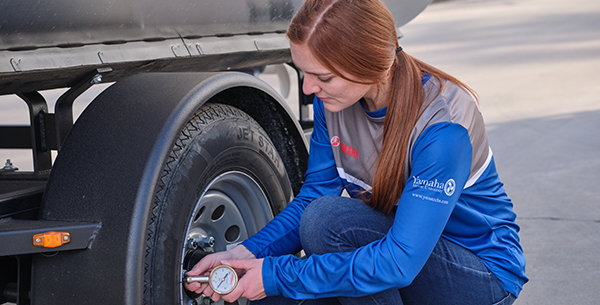
Trailers are often overlooked at the end of the season, but come spring, if there’s a problem, your boating season is on hold. Basic maintenance, like cleaning the trailer and making sure all grease fittings are filled, doesn’t take long. To prevent flat-spotting the tires, jack the trailer up, one side at a time, and prop the frame up on blocks of wood or jackstands. If concrete blocks are used, turn them so the holes face up, as the flat side has far less load-bearing capacity and can crumble. If you don’t jack up the trailer, make sure to move it once every couple of weeks and keep tire pressures maintained.
With the trailer in place for winter, make sure the bow is slightly higher and remove the drain plug to let any moisture that gathers drain out.
Battery Storage
For long-term storage, batteries should be removed from boats and kept in dry areas that don’t experience extreme temperatures. Lithium-ion batteries are not authorized for use as starting batteries for Yamaha outboards, and their use can damage motors and/or void the warranty. However, lithium-ion batteries are popular for house systems to power items like air conditioning, electronics and trolling motors, so a boat can often have both lead-acid starting batteries and lithium-ion batteries. Each type of battery requires a different storage and maintenance method.
Change All Fluids and Replaceable Components
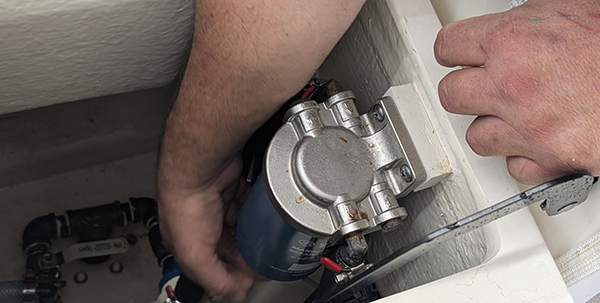
Another item at the top of the end-of-season to-do list is changing all the engine’s fluids. Changing the oil at the end of the season removes any contaminants that may have accumulated and ensures its lubrication capabilities are at their highest. Gear oil can contain metal fragments from gears that can bond to the inner casing if left for months at a time. Now is a good time to replace all filters and grease any fittings. Inspect sacrificial anodes and replace as needed.
Fog the Motor
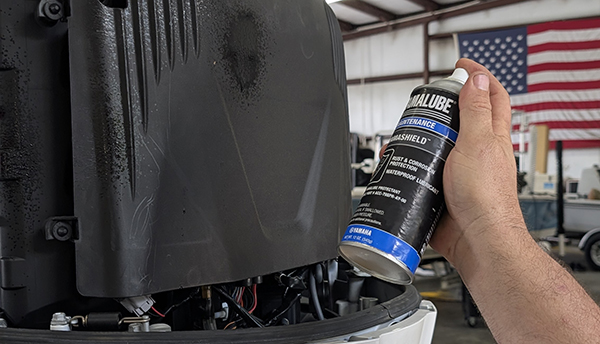
Fogging oil protects your outboard motor by coating internal engine surfaces, such as pistons, cylinder walls and valves, with a thin, moisture-resistant layer of protection.
For a detailed explanation about winterizing an outboard, including fogging the motor, check out Yamaha’s Maintenance Matters website.
Stabilize the Fuel
Make sure the tank only has ethanol-free gas when storing a boat for any length of time. In as little as a month, the ethanol in the fuel can mix with any water that makes its way into the tank, and it can sink to the bottom, where the fuel pickup is located. The resulting mixture can damage an engine beyond repair, and outboard warranties don’t always cover this preventable condition. To prevent any ethanol from separating from the gasoline, treat the fuel with a stabilizer such as Yamalube Fuel Stabilizer & Conditioner Plus. Either deplete the fuel tank as much as possible so that when spring comes, fresh gas can be added or fill it as full as possible to reduce space at the top, which can cause condensation to form.
After adding the stabilizer, run the engine for at least 15 minutes to ensure it reaches all areas of the fuel system.
Shrink Wrap or Cover?
Whether to shrink-wrap a boat or not depends on where it will be stored for the winter. If it’s tucked away in a garage or stored in a covered rack, a snug-fitting boat cover is sufficient. One benefit of not shrink-wrapping is the ability to inspect the inside of the boat throughout layup.
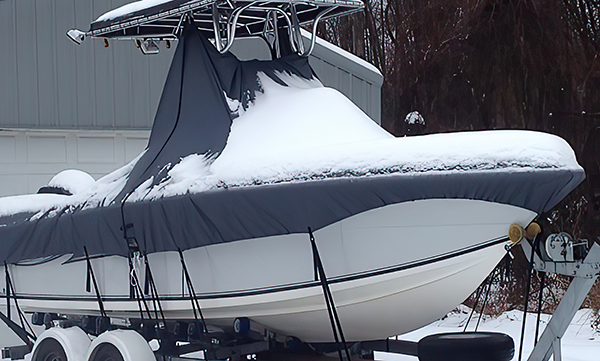
But if the boat is stored in the open, shrink-wrapping is probably better. Boat covers aren’t designed to handle the weight of several feet of snow or rain that has pooled and then frozen, although if it’s parked in the back yard, you’ll probably notice any problem. Also, covers are often not tight enough to be an effective barrier to prevent animals from using the inside of a boat as a winter den. Winter storms often bring strong winds that can force moisture under boat covers, while shrink-wrapping prevents this.
Sometimes “Winterization” Takes Place in Summer
For boaters like Florida snowbirds, their boat’s extended layoff might occur during the summer months when they’ve gone back north. In many ways, storing a boat in extreme heat is harder on a boat than in cold climates. Although the risk of systems freezing or snow piling up isn’t an issue, heat speeds up mold and mildew growth and accelerates the deterioration of improperly treated gas.
While it might surprise some, Yamaha recommends fogging the outboard when the motor will be inactive for only one month or longer, and it is even more important in hot, coastal climates, since moisture, humidity and salt air are the biggest enemies.
The Payoff
The reward for properly storing a boat for an extended layup after a harsh winer comes when it’s time to recommission it. If everything is done correctly, there shouldn’t be any nasty surprises that can cost thousands of dollars to fix. Even worse, you might miss the beginning of boating season when everyone else is out having fun. Problems in spring are also exacerbated by boat dealerships being slammed with the work of fixing problems other boaters failed to address in the fall. Proper winterization means the beginning of the season will be everything you’ve been dreaming about all winter.
If you are not mechanically inclined, have the authorized dealership that repairs your boat, handle the winterization process to ensure everything is taken care of.
Back to Blue Life
Take Everything Off the Boat
If it isn’t bolted down, take it off the boat. Items like life jackets and seat cushions should be cleaned and dried before storage inside. Soak dirty docklines, anchor rode, and power cords (not the ends) in a mild soap and warm water solution and then clean them with a specialized wraparound brush.
Clean The Boat Thoroughly
During the boating season, most conscientious boaters clean their boat after every outing. But there are times when owners are in a hurry and overlook something like a wet towel in a storage compartment or fail to drain a cooler. Saltwater anglers only overlook a shrimp or piece of cut bait left aboard once, because the smell after a week will be a vivid reminder never to do that again. But the good news is that active boaters will spot what was missed and can usually correct it before it becomes a serious problem. Long layups magnify small errors, so to avoid a surprise when the spring boating season arrives, make the last boat cleaning the most thorough one of the year.
Start at the front of the boat and slowly work your way back, using a soft-bristled brush for vinyl and shiny surfaces like gelcoat or painted surfaces, and a mild non-detergent boat soap. Use harder-bristled brushes for non-skid decking and non-gel-coated hatch and bilge interiors. The end of the season is also a great time to wax the boat for extra protection.
Make Sure Everything is Dry
Before shrink-wrapping or covering a boat, open all hatches and let the entire boat fully dry. This step is especially important if shrink-wrapping the boat, since any moisture will be sealed inside and could be the beginning of a great biology science project.
Drain All Plumbed Systems
Since water expands when frozen, water trapped inside the motor will likely cause serious damage. Yamaha outboards self-drain when positioned vertically. However, if the engine has recently been run in shallow or muddy water, drainage may be blocked, trapping water inside. If there is any question about drainage, have a Yamaha-certified mechanic clear any passageways with compressed air to be safe.
Don’t Forget the Trailer
Trailers are often overlooked at the end of the season, but come spring, if there’s a problem, your boating season is on hold. Basic maintenance, like cleaning the trailer and making sure all grease fittings are filled, doesn’t take long. To prevent flat-spotting the tires, jack the trailer up, one side at a time, and prop the frame up on blocks of wood or jackstands. If concrete blocks are used, turn them so the holes face up, as the flat side has far less load-bearing capacity and can crumble. If you don’t jack up the trailer, make sure to move it once every couple of weeks and keep tire pressures maintained.
With the trailer in place for winter, make sure the bow is slightly higher and remove the drain plug to let any moisture that gathers drain out.
Battery Storage
For long-term storage, batteries should be removed from boats and kept in dry areas that don’t experience extreme temperatures. Lithium-ion batteries are not authorized for use as starting batteries for Yamaha outboards, and their use can damage motors and/or void the warranty. However, lithium-ion batteries are popular for house systems to power items like air conditioning, electronics and trolling motors, so a boat can often have both lead-acid starting batteries and lithium-ion batteries. Each type of battery requires a different storage and maintenance method.
- Storing a Lead/Acid Battery: Lead-acid batteries have greater longevity when stored fully charged. When a conventional battery is partially discharged, lead sulfate crystals naturally form on the plates and disappear when the batteries charged shortly thereafter. But if a battery is left in a discharged state for a period of time, the crystals harden and become permanent, rendering that part
of the plate incapable of accepting a charge. Use a “smart” battery charger that will administer a trickle charge when needed to keep it topped off without overcharging. Temperatures between50F and 77F degrees are ideal for lead/ acid battery storage. - Storing a Lithium-Ion Battery: In contrast, lithium-ion batteries last longer when stored at around 40-50 percent charge because their chemistry becomes too active at full charge, prematurely aging the battery. These batteries discharge very slowly and prefer to be stored at temperatures between 40F and 60F degrees. After three months of inactivity, though, a charge/discharge cycle should be done.
Change All Fluids and Replaceable Components
Another item at the top of the end-of-season to-do list is changing all the engine’s fluids. Changing the oil at the end of the season removes any contaminants that may have accumulated and ensures its lubrication capabilities are at their highest. Gear oil can contain metal fragments from gears that can bond to the inner casing if left for months at a time. Now is a good time to replace all filters and grease any fittings. Inspect sacrificial anodes and replace as needed.
Fog the Motor
Fogging oil protects your outboard motor by coating internal engine surfaces, such as pistons, cylinder walls and valves, with a thin, moisture-resistant layer of protection.
For a detailed explanation about winterizing an outboard, including fogging the motor, check out Yamaha’s Maintenance Matters website.
Stabilize the Fuel
Make sure the tank only has ethanol-free gas when storing a boat for any length of time. In as little as a month, the ethanol in the fuel can mix with any water that makes its way into the tank, and it can sink to the bottom, where the fuel pickup is located. The resulting mixture can damage an engine beyond repair, and outboard warranties don’t always cover this preventable condition. To prevent any ethanol from separating from the gasoline, treat the fuel with a stabilizer such as Yamalube Fuel Stabilizer & Conditioner Plus. Either deplete the fuel tank as much as possible so that when spring comes, fresh gas can be added or fill it as full as possible to reduce space at the top, which can cause condensation to form.
After adding the stabilizer, run the engine for at least 15 minutes to ensure it reaches all areas of the fuel system.
Shrink Wrap or Cover?
Whether to shrink-wrap a boat or not depends on where it will be stored for the winter. If it’s tucked away in a garage or stored in a covered rack, a snug-fitting boat cover is sufficient. One benefit of not shrink-wrapping is the ability to inspect the inside of the boat throughout layup.
But if the boat is stored in the open, shrink-wrapping is probably better. Boat covers aren’t designed to handle the weight of several feet of snow or rain that has pooled and then frozen, although if it’s parked in the back yard, you’ll probably notice any problem. Also, covers are often not tight enough to be an effective barrier to prevent animals from using the inside of a boat as a winter den. Winter storms often bring strong winds that can force moisture under boat covers, while shrink-wrapping prevents this.
Sometimes “Winterization” Takes Place in Summer
For boaters like Florida snowbirds, their boat’s extended layoff might occur during the summer months when they’ve gone back north. In many ways, storing a boat in extreme heat is harder on a boat than in cold climates. Although the risk of systems freezing or snow piling up isn’t an issue, heat speeds up mold and mildew growth and accelerates the deterioration of improperly treated gas.
While it might surprise some, Yamaha recommends fogging the outboard when the motor will be inactive for only one month or longer, and it is even more important in hot, coastal climates, since moisture, humidity and salt air are the biggest enemies.
The Payoff
The reward for properly storing a boat for an extended layup after a harsh winer comes when it’s time to recommission it. If everything is done correctly, there shouldn’t be any nasty surprises that can cost thousands of dollars to fix. Even worse, you might miss the beginning of boating season when everyone else is out having fun. Problems in spring are also exacerbated by boat dealerships being slammed with the work of fixing problems other boaters failed to address in the fall. Proper winterization means the beginning of the season will be everything you’ve been dreaming about all winter.
If you are not mechanically inclined, have the authorized dealership that repairs your boat, handle the winterization process to ensure everything is taken care of.
Back to Blue Life